Soft Wash Specialists We treat your home like our own

Author: Zackary Michael

Fence Cleaning: Wood and Vinyl Fences Need Different Care

A fence is usually the largest structure in a yard after the house itself, hundreds of linear feet of surface standing in full view of the neighborhood. Yet it is the last thing anyone cleans. White vinyl slowly goes green and dingy, wood quietly fades to gray, and because the change happens over years, homeowners stop seeing it entirely. Visitors see it immediately.

The fix is faster and cheaper than most people expect, but it is not one size fits all. Vinyl and wood fences fail differently, clean differently, and get damaged by exactly the treatment the other one needs. Here is how professional fence washing handles each in the Winchester and Front Royal area.

How do you clean a wood or vinyl fence?

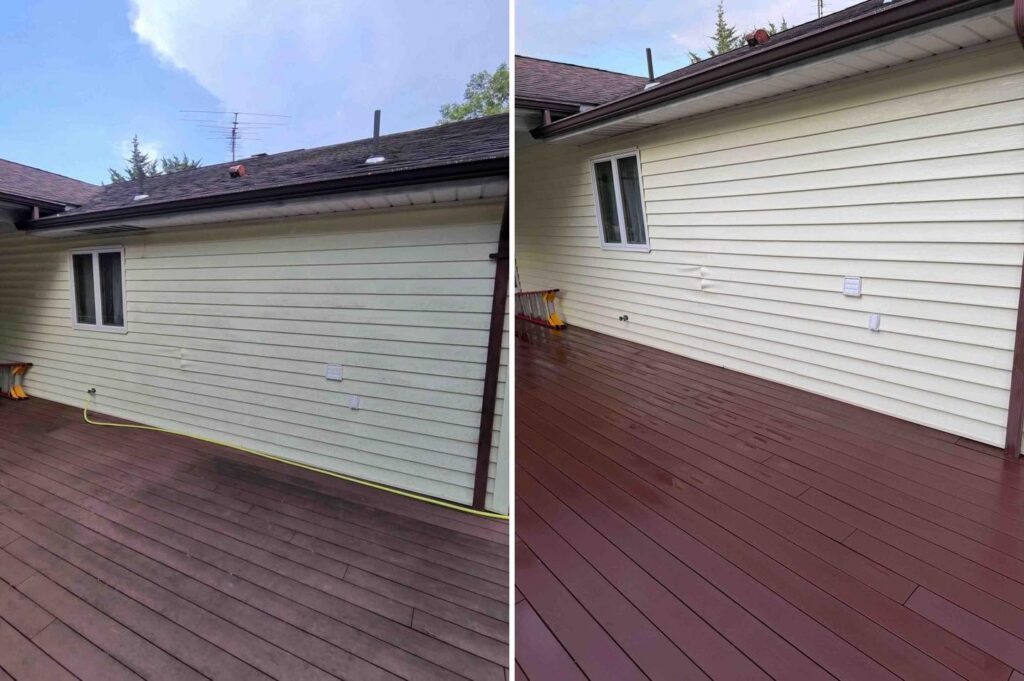
Vinyl fences are soft washed: a low pressure application of algae killing detergents followed by a gentle rinse, which restores the white without scarring the surface. Wood fences need low pressure paired with wood safe cleaners, and often a brightener to reverse graying. High pressure damages both, etching vinyl and shredding soft wood grain.

The common thread is that chemistry does the cleaning and water only rinses. Anyone attacking a fence with a high pressure wand alone is trading a temporary result for permanent surface damage, on a structure meant to last decades.
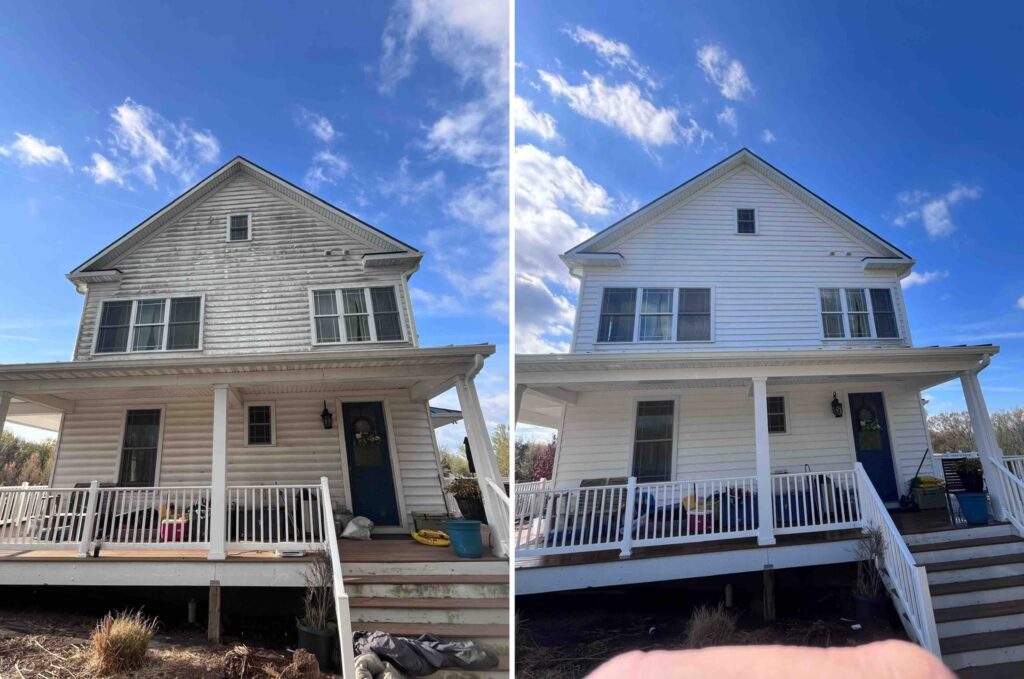
How do you clean a wood or vinyl fence?, Blue Ridge Pressure Wash

Why fences get dirty faster than your house

Fences live a harder life than siding. They sit in ground contact zones where rain splashes soil and organic matter onto the lower boards, sprinklers hit them several times a week, and shrub lines and shade trees keep whole sections damp. Unlike your house, a fence has no roof overhang protecting it, takes weather from both sides, and often runs through full shade where algae never dries out.

That is why a fence line shows green film years before the house does, always worst on the north side and under trees. In the Valley’s humid summers the growth accelerates, and by fall many fences carry a full season of algae, mildew, spider webbing, and grime, right when holiday guests and leaf bare sightlines put the whole backyard on display.

Vinyl fences: the green film problem

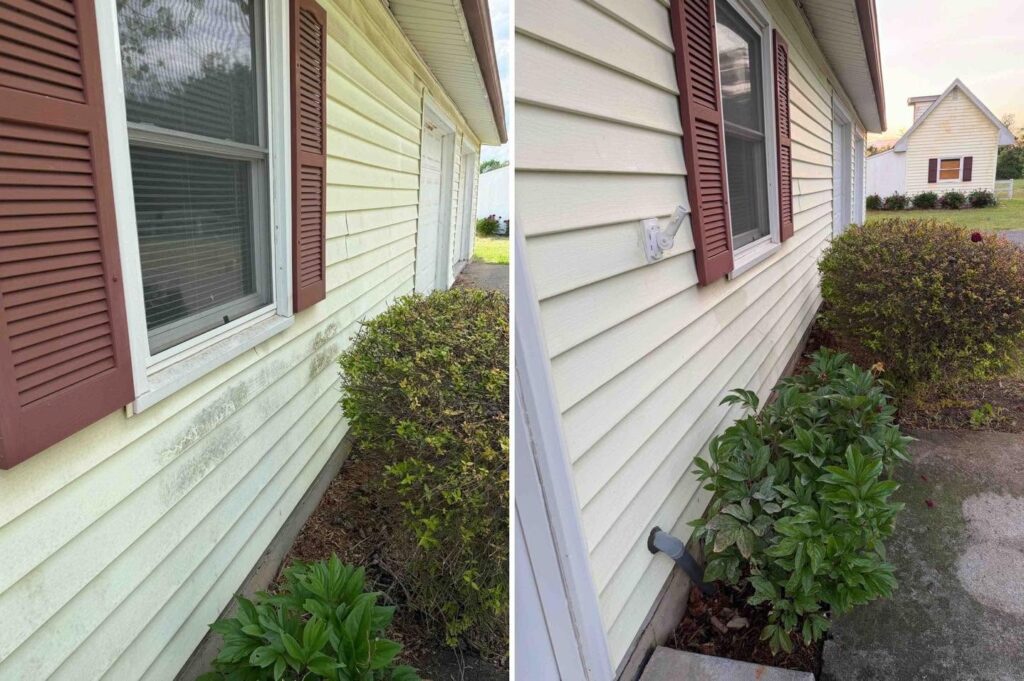
Vinyl’s great promise is that it never needs paint, but nobody mentions that it still needs washing. The green tint on white vinyl is the same algae that colonizes siding, and it bonds to the slightly textured surface where a garden hose cannot reach it. Left long enough it graduates to black mildew spotting, and the fence starts reading as old rather than merely dirty.

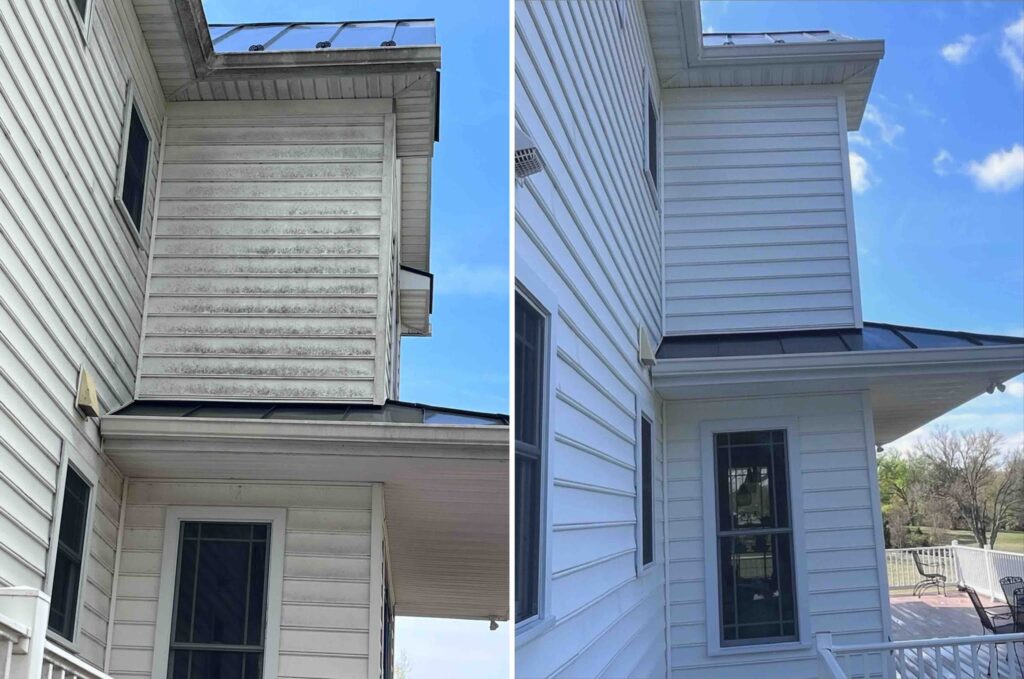
Soft washing resets vinyl completely. The detergent kills the growth at the root, the low pressure rinse carries it away, and the fence comes back startlingly white, usually in a single visit. Because the treatment sanitizes rather than just rinses, the results hold season after season. What ruins vinyl is the opposite approach: high pressure up close, which permanently etches the glossy surface and gives future algae a better grip.
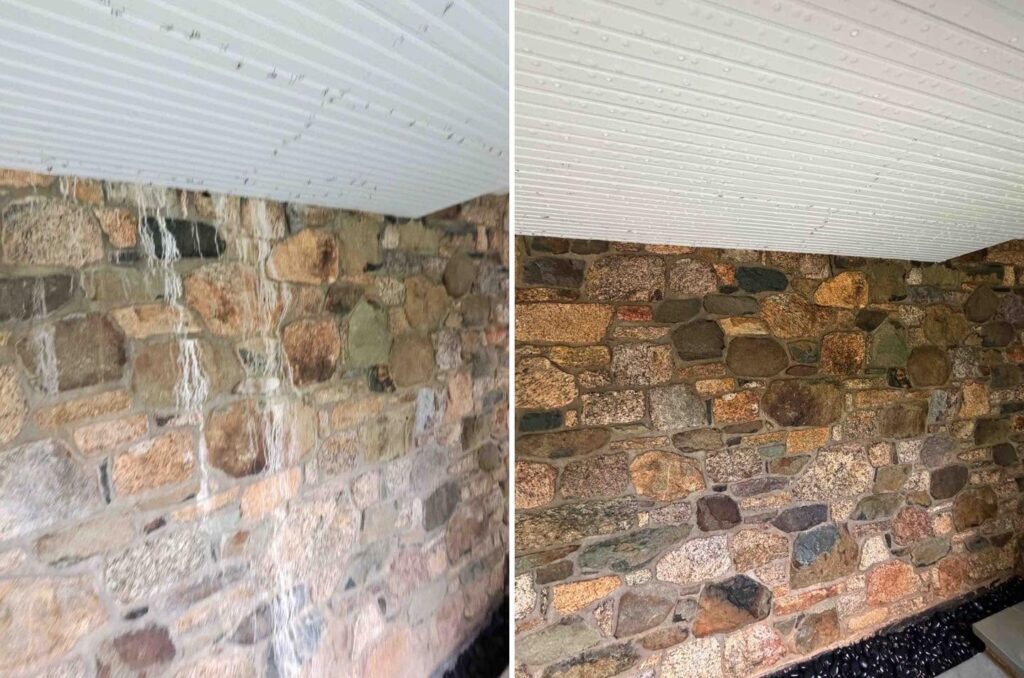
Vinyl fences: the green film problem, Blue Ridge Pressure Wash

Wood fences: graying, mildew, and stain prep

Wood fences fade to gray the same way decks do, through UV exposure killing the surface fibers, with mildew and algae adding blotches in the shaded runs. Professional cleaning pairs gentle pressure with wood safe detergents, and a brightener treatment afterward reverses much of the graying, warming the boards back toward their original cedar or pine tone. The transformation on a 20 year old fence routinely shocks its owner.

Cleaning is also step one of protection. If the plan is to stain or seal the fence, that finish needs clean, open grain to penetrate, and fall offers the same ideal application weather decks enjoy. A fence washed and sealed in September or October sheds winter moisture instead of absorbing it, which is the difference between boards that last decades and boards that cup, crack, and rot from the bottom up.

When to schedule fence washing, and what it pairs with

Fall earns the recommendation for the same reasons it does everywhere else on the property: the growing season is ending, stain weather is ideal, and the fence goes into winter clean instead of wearing a coat of algae through four wet months. Booking is also easier than in the spring rush, and cooler weather is gentler on cleaning solutions than July heat.

Fence washing rarely travels alone. Most homeowners bundle it with a deck cleaning, a house soft wash, or a concrete visit, since the crew and equipment are already on site and package pricing reflects that. For pre listing homes, a clean fence line is one of the cheapest ways to make an entire backyard photograph better, framing the lawn the way fresh paint frames a room.

Bottom Line

Vinyl fences want a soft wash that kills the green at the root, wood fences want gentle cleaning and brightening that reverses the gray, and neither one wants high pressure. Either way, a professional fence washing restores the biggest structure in your yard in an afternoon. Blue Ridge Pressure Washing cleans wood and vinyl fences across Winchester and Front Royal, on their own or bundled with a deck or house wash, so get a free quote and see what color your fence used to be.

Related reading: How Late in the Year Can You Pressure Wash in Virginia?, Pressure Washing Before Selling Your House

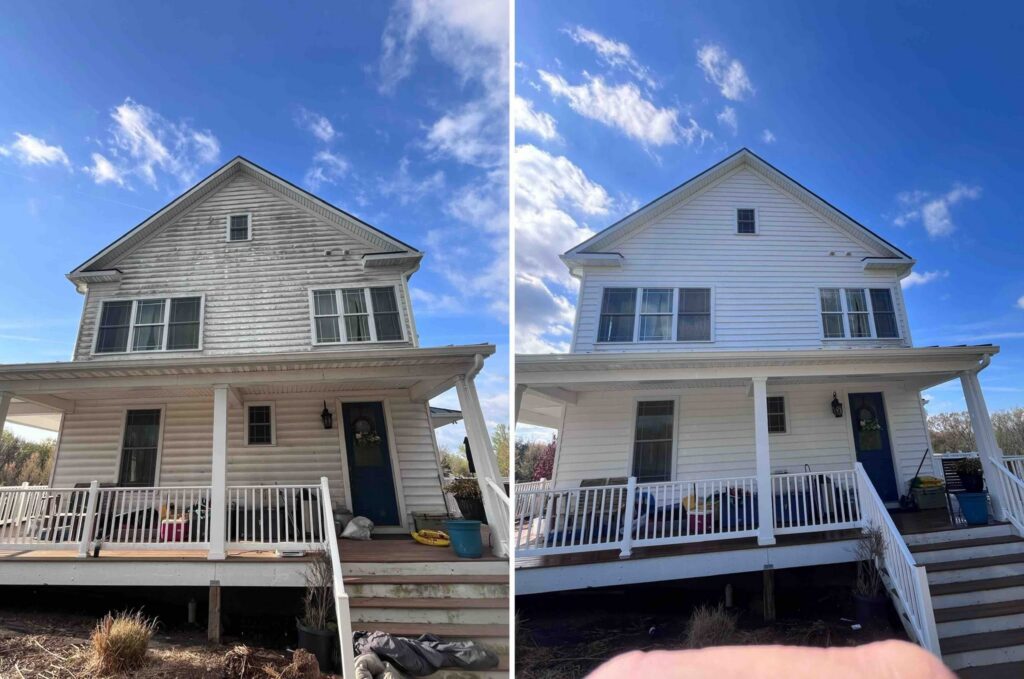
Pressure Washing Before Selling Your House
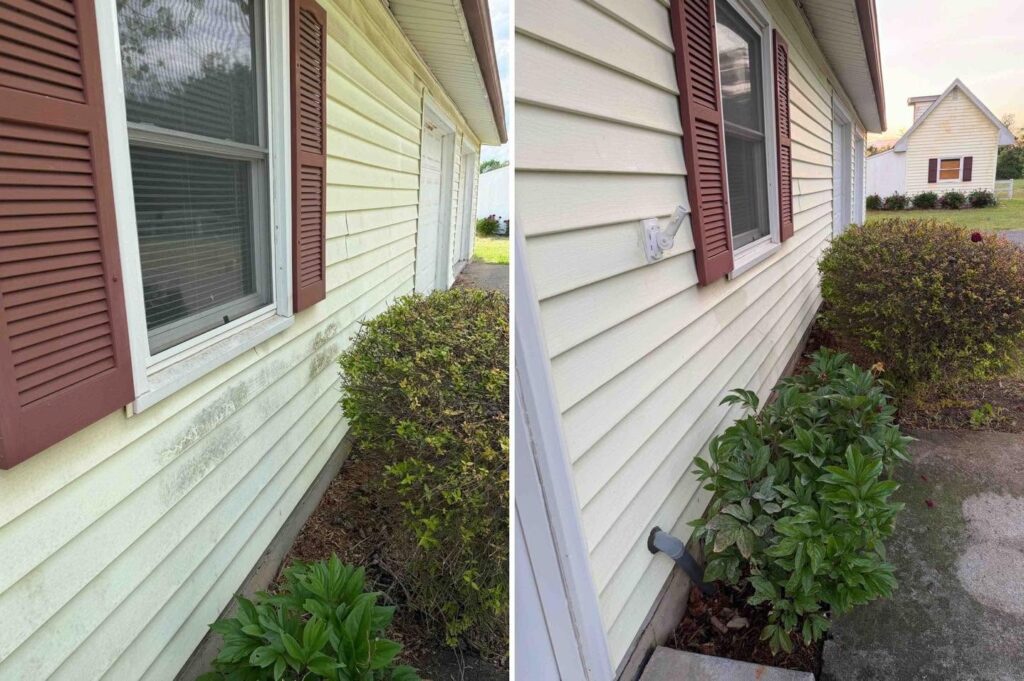
Sellers will repaint a bedroom, swap cabinet hardware, and stage the living room with rented furniture, then hand the photographer a house with green siding and a streaked roof. It is a strange blind spot, because the exterior is the one part of the home every single buyer sees, both online and in person, before they form the opinion everything else has to overcome.

Real estate agents in Winchester and Front Royal know this, which is why exterior cleaning sits at the top of most listing prep checklists. Fall listings make it even more important, since bare trees leave the house itself as the entire first impression. Here is what a wash actually does for a sale.

Should you pressure wash your house before selling it?

Yes. Professional exterior cleaning is one of the highest return preparations a seller can make, typically costing a few hundred dollars while improving every listing photo, every drive by, and every showing. Agents and appraisers consistently rank curb appeal projects among the best returns in home sale preparation, and washing is the cheapest one on the list.

The logic is simple: buyers cannot unsee their first impression. A clean exterior frames everything that follows as well maintained, while grime frames everything as deferred maintenance, including things that are actually fine.

Should you pressure wash your house before selling it?, Blue Ridge Pressure Wash

Your first showing happens online

Nearly every buyer now sees a home on a screen before deciding whether to see it in person, and the exterior photo is almost always the first image in the gallery and the thumbnail in the search results. Algae on the siding and rust stains on the driveway survive wide angle lenses just fine. So do roof streaks, which drone photography, now standard on many Valley listings, puts front and center.

That first image decides click through, and click through decides foot traffic. A bright, freshly washed exterior in the lead photo earns more showings from the identical house, at zero change to the asking price. It is the least expensive photo upgrade in real estate, and unlike staging, it stays that way for every showing after the photos too.

What buyers and inspectors read into grime

Buyers walk a property looking for clues about how it was cared for, and the exterior offers the loudest ones. Green siding, streaked gutters, and a stained driveway read as neglect even when the roof is sound and the mechanicals are perfect. Worse, dirt hides condition: a buyer who cannot tell stains from damage assumes damage, and assumptions get priced into offers.

Roof streaks deserve special mention. Black algae streaking makes shingles look older than they are, and it invites inspection commentary and buyer questions about roof age that a clean roof never provokes. A soft wash roof cleaning costs a tiny fraction of the price negotiation a nervous buyer opens over a roof that merely looks tired. Sellers rarely connect those dots until the inspection report arrives.

What buyers and inspectors read into grime, Blue Ridge Pressure Wash

The pre sale package: what to have cleaned

The high impact list matches the buyer’s path. The driveway and front walk are touched and seen first, so surface cleaned concrete sets the tone before the door opens. A full house soft wash brightens siding, soffits, and gutter faces, the entry area deserves detail attention, and the back deck or patio, where buyers linger and imagine themselves, should look cared for rather than weathered.

Add the roof if streaking shows from the street or in drone shots, and consider fence washing when a gray or green fence line frames the yard in photos. Done as one visit, the whole package typically lands in the range of a few hundred to around a thousand dollars depending on the home, which is pocket change against the price reductions dirty exteriors invite. Compare that to the several thousand dollar repaint the wash often makes unnecessary.

Time the wash to the photographer, not the closing

Sequence matters. The wash should happen one to two weeks before listing photos, close enough to look fresh, with a buffer for weather delays. Washing after photos are taken wastes most of the value, since the online listing keeps showing the dirty version to every new buyer regardless of how the house looks in person.

Fall sellers have a friendlier window than they think, since washing in the Valley continues well into November. One caution for occupied listings: book a crew that works clean and fast, protects landscaping and staging, and leaves walkways dry before showings. Tell the company the house is going on the market. Good crews prioritize listing jobs precisely because the deadline is real.

Bottom Line

A professional exterior cleaning before listing is the rare home sale prep that is cheap, fast, and visible in every photo and every showing: washed siding, bright concrete, and a streak free roof all tell buyers this house was cared for. Blue Ridge Pressure Washing preps listings across Winchester and Front Royal and can work around your photography date, so get a free quote before the sign goes in the yard.

Related reading: Leaf Stains on Your Driveway: What Fall Leaves Do to Concrete, How Late in the Year Can You Pressure Wash in Virginia?

How Late in the Year Can You Pressure Wash in Virginia?

Every October the same question starts arriving: is it too late in the year to have the house washed? Homeowners picture frozen siding and icy walkways and assume the season ended back in September, then resign themselves to looking at green siding until April.

The actual cutoff comes much later than most people think, and it is set by the thermometer rather than the calendar. Here is how the season really works in the Winchester and Front Royal area, why fall may be the best scheduling window of the entire year, and which jobs genuinely cannot wait for spring.

How late in the year can you pressure wash a house?

A house can be safely washed as long as daytime temperatures are reliably above about 40 degrees and surfaces have time to dry before an overnight freeze. In the Winchester area, that typically means exterior cleaning continues through November and often into early December in mild years.

Soft wash detergents keep working in cool weather, they just work a little slower, so crews adjust dwell times rather than canceling the season. The real planning question is not whether washing is possible in late fall. It is which surfaces should be done before winter and which can comfortably wait.

How late in the year can you pressure wash a house?, Blue Ridge Pressure Wash

Temperature is the real cutoff, not the calendar

Two things end the washing season: freezing and drying. Cleaning solutions and rinse water need surfaces above freezing to work and to dry, and walkways need to be fully dry before an overnight freeze turns rinse water into a skating rink. That is why late season jobs get scheduled for late morning on milder days, giving everything the afternoon to dry out.

What does not end the season is the cold snap itself. Valley weather in November swings between hard frosts and stretches in the 50s, and professional crews simply work the warm windows. A week that starts with frost on the roof can still finish with perfect washing weather by Thursday. Flexibility on the exact date is the only real requirement for late season scheduling.

Why fall might be the best time to book all year

Here is the scheduling secret: spring is the industry’s rush hour, and fall is the calm after it. Spring calendars in Winchester and Front Royal fill weeks deep the moment the first warm weekend hits, while September through November offers faster scheduling and more flexibility on dates. Same crew, same equipment, shorter wait.

Fall conditions are also excellent for the work itself. Pollen season is long over, humidity drops, and cooler weather is actually easier on cleaning solutions, which flash dry too quickly on 95 degree summer siding. Once the leaves finish dropping, it is also the natural moment to bundle gutter cleaning with a house wash, something the spring schedule cannot offer at all.

Why fall might be the best time to book all year, Blue Ridge Pressure Wash

What should be washed before winter

Some jobs genuinely belong in fall. Gutters must be cleared after leaf drop, before ice turns clogs into ice dams and pulled fascia. Driveways and walkways benefit from shedding their algae film and leaf stains before snow, ice melt, and salt arrive. Decks being stained need washing while stain application weather still holds, and any siding showing visible algae goes into winter better clean, since growth resumes every mild spell and holds moisture against the house through the freeze.

The common thread is winter exposure. Anything that will spend four months wet, frozen, or buried under leaves and snow does better starting that stretch clean. Anything purely cosmetic, with no moisture or safety consequence, has more freedom to wait.

What can wait for spring, and what happens in winter

Plenty of work parks comfortably until March. A lightly dusty house that was washed within the last year, a fence with no staining plans, or a patio nobody will use until April can all wait without penalty. The honest tradeoff is appearance: whatever the exterior looks like in November is what it will look like at every holiday gathering until spring.

Winter itself is not a dead season either. Commercial properties keep washing year round, with storefronts, dumpster pads, and entryways cleaned on mild days and hot water equipment extending the workable window. Residential exceptions happen the same way, during January thaws and mild February weeks. But for most Winchester homeowners, the practical takeaway is simpler: the fall window runs deeper than you think, and it is open right now.

Bottom Line

Exterior cleaning in the Winchester and Front Royal area runs well into November and sometimes beyond, with temperature, not the calendar, setting the limit. Gutters, concrete, decks awaiting stain, and algae covered siding all belong on the fall side of winter. Blue Ridge Pressure Washing works the season to its true end, so if you are staring at a job you assumed had to wait until spring, get a free quote and it may be done by the weekend.

Related reading: Deck Cleaning Before Fall Staining: Get the Prep Right, Leaf Stains on Your Driveway: What Fall Leaves Do to Concrete

Leaf Stains on Your Driveway: What Fall Leaves Do to Concrete

Every November, the same discovery happens in driveways across Winchester and Front Royal. The leaves finally get raked or blown away, and underneath them the concrete is covered in brown ghost prints, perfect leaf silhouettes stamped into the surface like fossils. A hose will not touch them, and neither will the stiff brush that seemed like a good idea.

Those prints are tannin stains, and fall produces them by the thousands. Here is what is actually happening between the leaves and your concrete, which trees are the worst offenders, and how professional cleaning gets the surface back to an even color before winter.

Do leaves stain concrete driveways?

Yes. Wet leaves release tannins, the same natural compounds that color tea and wine, and porous concrete absorbs them like a sponge. The result is brown or rust colored leaf prints that remain after the leaves are removed. The longer leaves sit wet on the surface, the deeper the stain sets.

Rain does not rinse tannin stains away, because the pigment is inside the pores of the concrete rather than sitting on top. That is why the stains survive both the leaf blower and the garden hose, and why they need chemistry, not just water, to release.

Do leaves stain concrete driveways?, Blue Ridge Pressure Wash

Why fall is the hardest season on your concrete

Leaves are only the start of the fall assault. Acorns and black walnuts, both everywhere in the Valley, leave some of the darkest organic stains concrete can take, with walnut hulls staining nearly black as they break down. Sweetgum balls, crabapples, and berries dropped by birds each add their own marks, and every stain gets worse the longer it marinates under a wet leaf pile.

Fall moisture compounds it all. Shorter days and cooler nights mean shaded driveways and north facing walkways stay damp for days at a time, which is exactly what algae and mildew want. Many homeowners notice their concrete developing a green or black film in October and November, right on top of the tannin stains, setting up a driveway that goes into winter looking ten years older than it is.

How professionals remove tannin and organic stains

Professional concrete cleaning attacks these stains in two stages. First, a pretreatment breaks down the organic pigments and kills the algae and mildew living in the surface. Then a surface cleaner, the spinning attachment that washes in wide even passes, deep cleans the whole slab uniformly, so the driveway comes back one consistent color instead of a patchwork of clean spots and wand stripes.

Honest expectations matter with the worst offenders. Fresh tannin staining releases readily, and most leaf prints disappear completely. Deep set walnut or rust staining sometimes needs specialty treatments, and the darkest marks may only fade heavily on the first visit before sun and weather finish the job. A professional crew will tell you which category your stains fall into before the work starts, not after.

How professionals remove tannin and organic stains, Blue Ridge Pressure Wash

Slick concrete is a safety problem, not just a cosmetic one

Wet leaves on concrete are slippery on their own, but the film they leave behind is worse. Decomposing leaf matter feeds an algae layer that turns shaded walkways, steps, and porch landings genuinely treacherous every time it rains, and it stays through winter to catch snowmelt. Front steps under a maple are a classic slip spot in every Valley neighborhood.

That risk is easy to retire. A fall cleaning strips the biofilm along with the stains, restoring the natural traction of bare concrete right when the wet season arrives. For households with older family members visiting over the holidays, clean high traction walkways are one of those quiet safety upgrades nobody notices until the year it is missing.

Clean it before salt season, and consider sealing

There is one more reason fall is the right moment for concrete work: what comes next. Winter brings road salt tracked off tires, deicer scattered on walkways, and dozens of freeze and thaw cycles. Concrete already holding moisture in a layer of organic grime takes that abuse worse, and salt scaling, the surface flaking you see on older driveways, loves a dirty slab.

A thorough fall cleaning gives the surface its best shot at wintering well, and it is the required first step if sealing is on your list. Sealer applied over stains locks them in permanently, so the order is always clean first, seal second. Cleaned and sealed in October, a driveway sheds leaf stains, salt, and snowmelt all winter and rinses back to bright with spring rain.

Bottom Line

Fall leaves, acorns, and walnuts stain concrete from the inside, and the marks only deepen the longer they sit, so the window between leaf drop and hard freeze is the time to act. Professional cleaning lifts the stains, strips the slick algae layer, and preps the slab for salt season or sealing. Blue Ridge Pressure Washing restores driveways, walkways, and patios across Winchester and Front Royal, so get a free quote before winter locks the stains in until April.

Related reading: Storefront Pressure Washing Before the Holiday Season, Deck Cleaning Before Fall Staining: Get the Prep Right

Deck Cleaning Before Fall Staining: Get the Prep Right

Ask anyone who has watched a fresh coat of deck stain peel by spring, and the story is almost always the same: the stain went on over wood that was never properly cleaned. The product gets blamed, the brand gets switched, and the same thing happens again two years later. The stain was never the problem. The prep was.

Fall is one of the best staining windows of the year in the Winchester and Front Royal area, which makes early fall the moment to get the wash right. Here is why cleaning comes first, what professional deck prep involves, and how to time the two steps so the finish actually lasts.

Do you need to wash a deck before staining it?

Yes. Stain only performs on clean, open wood grain, so every deck needs a proper wash before staining. Mildew, gray weathered fibers, dirt, and failing old finish all block the stain from penetrating, which leads to blotchy color and early peeling. Wash first, let the wood dry for two to three days, then stain.

Manufacturers say the same thing on every can, because they know where the warranty claims come from. Stain is not paint sitting on the surface. It has to soak into the wood, and it cannot soak into a layer of grime, spores, and dead gray fibers.

Do you need to wash a deck before staining it?, Blue Ridge Pressure Wash

Why fall is prime staining season in the Valley

Deck finishes are picky about weather. Most stains want surface temperatures roughly between 50 and 85 degrees, moderate humidity, and a dry stretch of a few days on either side of application. Valley summers violate all three regularly, with 90 degree deck boards that flash the stain dry too fast and pop up thunderstorms that ruin a wet coat. September and October, by contrast, serve up exactly the conditions the label asks for.

Fall staining also means the protection is in place before the hardest season on wood. Winter snow sitting on horizontal boards, freeze and thaw cycles working at every crack, and months of moisture do real damage to unsealed decks. A deck cleaned and stained in early fall goes into winter defended and comes out in spring needing nothing.

What a professional deck wash actually involves

Wood is soft, and this is where do it yourself attempts cause permanent damage. High pressure blasts the soft springwood out from between the harder grain lines, leaving boards fuzzy with raised splinters, wand stripes, and gouge marks that only sanding can undo. Professional deck cleaning uses low pressure paired with wood safe detergents that kill mildew and lift grime chemically instead of mechanically.

The second professional step most homeowners skip is brightening. After the cleaning solution does its work, a wood brightener rinse restores the wood’s natural pH, opens the grain back up, and warms gray boards back toward their original tone. Railings, spindles, and stairs get the same treatment, and surrounding plants get rinsed and protected throughout. The deck that emerges is clean, bright, and chemically ready to accept stain evenly.

What a professional deck wash actually involves, Blue Ridge Pressure Wash

The gray wood problem, explained

That silver gray color on a weathered deck is not dirt. It is a layer of wood fibers killed by UV exposure, sitting on top of sound wood like a coat of dust that happens to be attached. Stain applied over gray wood is bonding to dead fibers, and when those fibers let go, the finish goes with them. That is the peeling most homeowners have watched happen.

Proper cleaning and brightening removes most of that dead layer and restores a surface stain can actually grip. It is also the honest test of a deck’s condition: once the gray lifts, you can see whether boards are sound or genuinely worn out, and which spots need a sanding pass or a replacement board before finish goes on. Plenty of decks that look ready for replacement turn out to be one wash away from looking ten years younger.

Timing the wash, the dry, and the stain

The sequence matters more than the products. Wash first, then give the wood two to three dry days so moisture trapped in the boards can escape before stain seals the surface. Stain applied to damp wood clouds, adheres poorly, and peels early, which is why professionals check the forecast for a clear window covering both the drying days and the day of application.

In practice that means booking the wash by late September or early October in the Winchester area, while warm dry stretches are still reliable. Wait too long and overnight temperatures start falling out of range, and the project slides to spring, leaving bare wood exposed all winter. Even homeowners who plan to apply the stain themselves come out ahead having the cleaning and brightening done professionally, since prep is the step that decides the outcome.

Bottom Line

A deck stain job succeeds or fails before the first drop of stain goes on, and fall is the Valley’s best window to do the whole sequence right: professional wash, brightener, dry days, then finish. Blue Ridge Pressure Washing cleans and preps decks across Winchester and Front Royal, whether we hand it back ready for your stain brush or you just want the wood restored, so get a free quote while the fall staining window is still open.

Related reading: Fall House Washing: Prep Your Home Exterior for Winter, Storefront Pressure Washing Before the Holiday Season

Storefront Pressure Washing Before the Holiday Season

Every retail owner knows the feeling of walking up to their own storefront and suddenly seeing it the way a customer does: gum polka dots on the sidewalk, a gray wedge of grime around the entrance, cobwebs in the sign lighting, and a drink spill that has been there since summer. Customers see all of it too. They just see it before they decide whether to come in.

For Winchester businesses, the weeks between late summer and mid fall are the smart window to fix that, because the holiday shopping season is when foot traffic, window displays, and first impressions matter most. Here is how commercial exterior cleaning works and why fall is when it pays off hardest.

How often should a storefront be pressure washed?

Most storefronts should be professionally washed quarterly, with high traffic locations like restaurants and coffee shops often needing monthly sidewalk service. At an absolute minimum, every customer facing business benefits from one thorough cleaning in early fall, so the entrance, sidewalk, and facade are spotless before holiday shopping traffic arrives.

The right frequency tracks your foot traffic and your food service. Doors that hundreds of hands touch, sidewalks that catch spills daily, and entries under trees or awnings all build grime faster than a quiet office frontage. A cleaning schedule simply keeps the building matched to the standard your business already tries to project.

How often should a storefront be pressure washed?, Blue Ridge Pressure Wash

Customers judge the outside before they see the inside

Retail research keeps confirming what common sense suggests: a large share of shoppers have skipped a business entirely because the exterior looked dirty or neglected. The storefront is the packaging, and buyers read a grimy entrance as a preview of the service inside. In a walkable downtown like Winchester’s, where shoppers stroll past a dozen options, that judgment happens in seconds and in silence.

The details customers register are specific and fixable. Gum spots and drink stains on the walkway. Green film creeping up the base of the building. Streaks on the awning, webs around the lights, and a door glass haze that never quite wipes off. A professional exterior cleaning erases the whole list in one visit, and regulars will notice the difference even if they cannot name what changed.

Sidewalks, entrances, and the gum problem

Concrete walkways take the worst abuse of any commercial surface: foot traffic grime, spills, leaf stains from street trees, and years of flattened gum. Professional crews clean them with surface cleaners that leave wide, even passes instead of wand stripes, and hot water equipment melts gum and cuts grease in a way cold water rentals simply cannot. Entrance thresholds, trash can pads, and dumpster areas get targeted degreasing while the equipment is on site.

The building face gets a gentler treatment. Storefront facades, awnings, and signage are soft washed with detergents matched to the material, whether that is brick, painted block, EIFS, or metal panel, so the finish brightens without damage. The result reads as new paint from across the street, for a fraction of the cost of actual paint.

Sidewalks, entrances, and the gum problem, Blue Ridge Pressure Wash

The safety and liability angle owners overlook

A dirty entrance is not just an image problem. Algae film, grease near food service doors, and wet leaves on shaded concrete are genuinely slick, and entrance walkways are where slip and fall claims happen. Regular washing removes the biofilm layer that makes wet concrete treacherous, which is why property managers treat exterior cleaning as risk management rather than decoration.

Fall sharpens the issue. Leaf drop coats sidewalks through November, then winter adds ice melt residue that leaves its own white film across entries. Going into that season with clean, sealed, high traction concrete keeps customers upright, and it demonstrates the kind of routine maintenance that insurers and landlords like to see documented.

Scheduling around business hours and the holiday calendar

Good commercial crews work around commerce, not against it. Storefront washing typically happens in early morning hours or after close, so sidewalks are dry and open before the first customer arrives. Water control, wet floor signage, and coordination with neighboring tenants are part of the service, and a professional outfit carries the insurance certificates your landlord or property manager will ask about.

The calendar argument is simple: holiday displays go up in early November, and the cleaning should happen before the decorations do. Booking in September or October beats competing for slots during the November crunch, and many Winchester businesses simply set a quarterly schedule so the storefront never drifts far from opening day condition again.

Bottom Line

Your storefront makes a promise before your staff ever gets the chance, and a professionally cleaned entrance, sidewalk, and facade make it a good one heading into the busiest selling season of the year. Blue Ridge Pressure Washing cleans storefronts, walkways, and commercial exteriors across Winchester and Front Royal, with scheduling built around your business hours, so request a free quote and have the building holiday ready before the rush.

Related reading: Why Fall Gutter Cleaning Matters in Winchester and Front Royal, Fall House Washing: Prep Your Home Exterior for Winter

Fall House Washing: Prep Your Home Exterior for Winter

Spring gets all the attention when people talk about washing a house, but ask anyone who cleans exteriors for a living and they will tell you fall is the sleeper season. The summer that just ended was one long growing season for algae and mildew, and the winter ahead is four months when none of it can be removed and all of it can spread.

A house washed in September or October goes into winter clean and comes out of it clean. A house that skips fall carries an entire summer of growth through the freeze and looks its worst for the holidays. Here is why the fall wash earns its spot on the checklist for Winchester and Front Royal homes.

Should you wash your house in the fall?

Yes. Fall is the second most effective time of year to soft wash a home, because it removes the algae, mildew, and grime that built up over the humid summer before winter locks it against your siding for months. A fall wash also means the house looks its best through the holidays and needs less work come spring.

Think of it as ending the growing season on your terms. Organic growth slows in cold weather but does not die, so whatever is on the siding in November is still there in March, usually with new company. Removing it in fall resets the clock at the smartest possible moment.

Should you wash your house in the fall?, Blue Ridge Pressure Wash

What summer leaves behind on your siding

By September, a Valley home has absorbed three months of humidity, thunderstorm splash, and airborne spores. The shaded north side is usually showing its green tint again, mildew dots are spreading under eaves and behind shrubs, and every corner of the porch ceiling seems to have its own spider. Wasp nests, dirt dauber tubes, and dust webbed onto the siding round out the summer collection.

None of that is just cosmetic. Algae and mildew hold a film of moisture against siding and painted trim, and they keep feeding whenever temperatures allow. A soft wash clears all of it in one visit: siding, soffits, gutter exteriors, and porch ceilings, killed at the root with professional detergents rather than smeared around with a brush.

Why winter makes existing grime worse

Winter is hard on a dirty house in a way it is not on a clean one. Every place organic growth holds moisture becomes a freeze point, and repeated freezing and thawing works at paint edges, caulk lines, and siding seams all season long. Grime on horizontal surfaces catches and holds snowmelt, and shaded green patches stay damp for weeks at a time between storms.

There is a practical problem too: once overnight temperatures settle below freezing, washing season is largely over until spring. The window between the last leaf drop and the first hard cold snap is when the exterior gets whatever care it is going to get. Homes that catch that window go into the freeze protected. Homes that miss it wait until April, and the buildup compounds the whole time.

Why winter makes existing grime worse, Blue Ridge Pressure Wash

Clean for the season everyone actually sees your house

Here is the argument nobody makes about fall washing: winter is peak visibility season for your exterior. Leaves drop, landscaping dies back, and suddenly the house itself is the whole show from the street. Add holiday lights, family arriving for Thanksgiving, and neighborhood gatherings, and October turns out to be exactly the right time to have the siding bright and the gutters streak free.

Holiday decorations look noticeably better on a clean canvas. Light strings run along gutter faces and rooflines, wreaths hang against siding and doors, and every photo from the front yard has your exterior in the background. A fall soft wash is the difference between decorations on a crisp white backdrop and decorations on a gray one.

What a smart fall exterior visit includes

The efficient move is bundling. A fall visit typically pairs the house soft wash with gutter cleaning and brightening, since the crew is already working the roofline as the leaves finish dropping. Many homeowners add the driveway and walkways so concrete goes into salt season clean, and a quick rinse of the porch, patio, and outdoor furniture closes out the outdoor season properly.

Fall is also the moment to look up. If the roof is showing black streaks, cooler weather is a fine time for a soft wash roof cleaning, and it beats letting the algae feed for another year. One scheduled visit in September or October can reasonably reset the entire exterior, usually at better package pricing than booking each service separately in spring.

Bottom Line

A fall house wash clears out a full summer of algae and grime before winter freezes it in place, carries your curb appeal through the holidays, and shortens the list come spring. The scheduling window between leaf drop and hard freeze is short in the Valley. Blue Ridge Pressure Washing soft washes homes across Winchester and Front Royal all fall, so grab a free quote and claim a date before the calendar tightens up.

Related reading: Why Fall Gutter Cleaning Matters in Winchester and Front Royal

Why Fall Gutter Cleaning Matters in Winchester and Front Royal

Gutters are the one part of your exterior that fails silently. Nobody notices a clog in October. Everybody notices the ice sheet on the front steps in January, the water stain spreading across the basement wall, or the fascia board that turned soft behind a gutter that overflowed all winter. By then the cheap fix has already become an expensive one.

The Shenandoah Valley is full of mature oaks and maples, which makes fall gutter cleaning less of a chore and more of a deadline. Here is when to schedule it, what clogged gutters actually do to a house over winter, and why the outside of the gutter deserves attention too.

When should you clean your gutters in Winchester, VA?

Gutters in the Winchester and Front Royal area should be cleaned at least twice a year, once in late spring and once in late fall after the bulk of the leaves have dropped, typically from late October into November. Homes surrounded by mature trees often need a third cleaning midway through the leaf drop.

The fall cleaning is the one you cannot skip. It is the last chance to empty the system before snow, ice, and months of freezing weather lock everything in place. A gutter that goes into December full of wet leaves stays full until March, and it causes damage the entire time.

When should you clean your gutters in Winchester, VA?, Blue Ridge Pressure Wash

What clogged gutters do to your home over winter

A gutter’s whole job is moving water away from the house, and a clogged one does the opposite. Water overflows the front edge and lands right at the foundation, where it saturates the soil against your basement wall. It backs up under the shingle edge, soaking the wooden fascia and soffit until they rot. In freezing weather, trapped water becomes ballast, and the added weight bends hangers and pulls gutters away from the house.

Winter adds its signature problem: ice. Water that cannot drain freezes into a solid block, and melting snow refreezes at the clogged edge into ice dams that force water backward under the roofing. Overflow also drips onto walkways and steps below, creating a fresh sheet of ice in exactly the spot your family walks every morning.

The Valley’s leaf drop makes timing tricky

The challenge in Winchester and Front Royal is that leaves do not drop on one convenient weekend. Maples let go early, oaks hang on stubbornly into November, and a windy week can undo a cleaning that happened ten days earlier. That is why the smart schedule aims late in the season, after the heaviest drop, rather than at the first sign of color in the Blue Ridge.

Gutter guards help but do not retire the chore. Seeds, pine needles, shingle grit, and crushed leaf fragments still work through most systems, and the guards themselves collect a mat of debris on top that can shed water right over the gutter. Guarded systems still deserve a fall inspection and rinse, just a less frequent one.

The Valley's leaf drop makes timing tricky, Blue Ridge Pressure Wash

Cleaning the inside, brightening the outside

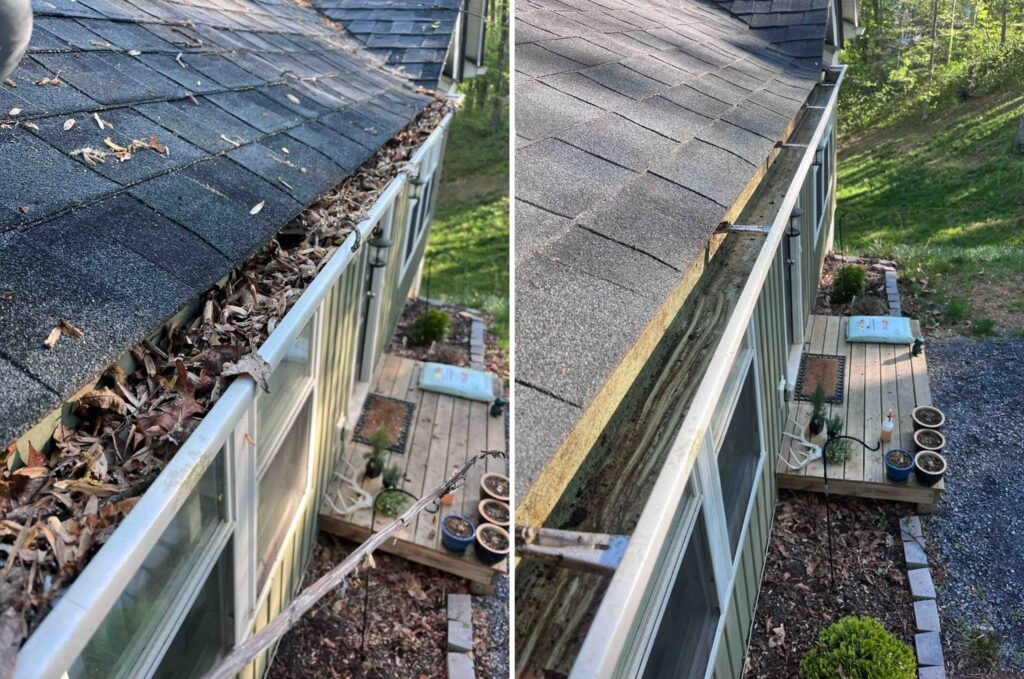
A full gutter service has two halves. Gutter cleaning clears the inside: leaves, shingle granules, and the sludge layer scooped and flushed out, with downspouts tested so water actually exits at the bottom. That is the functional half, the one that protects the roof edge and foundation over winter.

Gutter brightening handles the cosmetic half. Those dark vertical stripes on the gutter face, the ones that survive rain and ordinary house washing, are oxidation and road film electrostatically bonded to the aluminum. They need a dedicated cleaner and hand detailing to release, which is why they laugh at a garden hose. Brightened gutters read as crisp white trim lines around the whole roof, and the difference from the curb is bigger than most homeowners expect.

Pair gutters with a fall exterior cleaning

Fall gutter work bundles naturally with the rest of the exterior. If the house is getting a soft wash before the holidays, the crew is already working the roofline, so cleaning and brightening the gutters in the same visit saves setup time and usually earns package pricing. The same logic applies to a roof cleaning, since gutters catch the debris that roof work rinses down.

There is also a simple safety argument for hiring it out. Gutter cleaning puts homeowners on ladders at the worst time of year, on cool mornings with dew on every rung. Falls from ladders remain one of the most common homeowner injuries, and a professional crew with proper equipment clears the whole system in a fraction of the time, then hauls the mess away instead of leaving it on the lawn.

Bottom Line

Fall gutter cleaning is the cheapest insurance your roofline, siding, foundation, and walkways can buy before winter, and gutter brightening makes the whole house look sharper while the crew is up there. The window is short once the oaks finally let go. Blue Ridge Pressure Washing cleans and brightens gutters across Winchester and Front Royal, on their own or bundled with a fall house wash, so get a free quote before the November rush fills the calendar.

How to Choose a Pressure Washing Company in Winchester, VA

Exterior cleaning looks simple from the curb: a truck, a hose, some soap. That illusion is exactly why hiring goes wrong so often. The gap between a professional crew and a guy with a rental machine shows up later, in your siding, your landscaping, and your window seals. By the time the damage is visible, the crew that caused it has usually cashed the check and moved on.

Before you book anyone in Winchester or Front Royal, run them through this checklist. It takes about ten minutes, and it prevents nearly every horror story we get called out to fix. None of it requires expertise. It just requires asking.

How do you choose a pressure washing company in Winchester, VA?

Choose a pressure washing company by confirming they carry general liability insurance, asking what method they will use on each surface, and checking recent local reviews with photos. The right answer includes soft washing for siding and roofs, and any company planning to put high pressure on either one should not touch your home.

Price matters, but method and accountability matter more. A cheap wash done wrong ends up costing multiples of a professional one done right. The checklist below runs in the order that saves you the most time.

How do you choose a pressure washing company in Winchester, VA?, Blue Ridge Pressure Wash

Insurance is the first filter

Ask for a certificate of general liability insurance before anything else. Water forced behind siding, a cracked window, a streaked roof, or an injured worker on your property all become your problem the moment the company is uninsured. Legitimate companies send proof within hours and never act put off that you asked for it. For total certainty, ask for the certificate to be sent directly from the insurance agency.

This industry is seasonal, and every spring new operations appear that are gone by fall. Insurance, a verifiable business name, and a track record in the community separate real companies from side hustles. If a crew cannot produce a certificate, the conversation is already over.

Ask about methods, not just price

The single most revealing question you can ask is this: what method will you use on my siding and my roof? The correct answer is soft washing, meaning low pressure paired with a detergent mix. Shingle manufacturers and the Asphalt Roofing Manufacturers Association endorse low pressure chemical cleaning, and putting high pressure on a roof voids most shingle warranties on the spot. The same warning applies to vinyl siding, which high pressure can crack, etch, and flood from behind.

Listen for surface by surface answers: soft wash for siding and roofs, a surface cleaner for concrete, gentler settings for wood. If the answer to every surface is the same machine at the same pressure, that is not a cleaning plan. That is a liability holding a wand.

Ask about methods, not just price, Blue Ridge Pressure Wash

Reviews, photos, and local history

Read recent Google reviews and look specifically for photos, mentions of how the crew treated the property, and how the company responded when something went wrong. A five star average built on detailed reviews from Winchester and Front Royal homeowners means far more than a perfect score sitting on a handful of ratings. Pay attention to how far back the reviews go, since consistency over years is the real signal.

Before and after photos on the company’s website and profiles show you their actual standard of work. Look for evenly cleaned concrete with no stripes, uniformly bright siding, and healthy, intact landscaping in the shots. Companies that are proud of their work document it constantly. Companies that are not, do not. A gallery full of local homes also proves the company actually works in your area.

Get the quote and guarantee in writing

A professional quote lists each surface, the method planned for it, what is and is not included, and the total price. Written scope protects both sides and makes honest comparison possible. Ask whether plants get protected during the wash, whether gutter exteriors are included with the house, and what happens if a stubborn stain does not come out. Vague quotes produce vague results, and disputes always trace back to what was never written down.

Finally, ask about a satisfaction guarantee. Reputable companies stand behind the finished product and come back if a spot was missed. Put it all together: insurance, correct methods, strong local reviews, and a written guarantee. A company that clears all four is worth whatever small premium they charge. That is the profile of a business that will still be here five years from now.

Bottom Line

Insurance, soft wash methods on siding and roofs, real local reviews, and a written surface by surface quote: that is the entire checklist. Any company that clears all four will treat your home well, and any company that stumbles on the first two is no bargain at any price. Blue Ridge Pressure Washing welcomes every one of these questions from Winchester and Front Royal homeowners, and we are glad to answer them before you ever book.

Related reading: How Much Does Pressure Washing Cost

Why Your Roof Has Black Streaks and How Roof Cleaning Fixes It

Look down almost any street in Winchester or Front Royal and you will spot them: dark streaks running down asphalt shingle roofs, usually worst on the side that gets the least sun. Most homeowners assume it is dirt, or worse, that the shingles themselves are failing. It is neither. The pattern is so common in the Valley that many people assume it is just what roofs do.

Those streaks are alive, they are feeding on your roof, and the fix is simpler and far cheaper than the replacement some homeowners get talked into. Here is what is actually happening up there.

What are the black streaks on your roof?

Black streaks on asphalt shingles are colonies of Gloeocapsa magma, an airborne algae that feeds on the crushed limestone filler inside modern shingles. Because the streaks are living growth rather than dirt, rain never rinses them away, and the colonies spread wider every warm, humid season until the roof is properly cleaned.

The algae arrives as spores on the wind, which explains the neighborhood pattern: one roof streaks first, and the surrounding houses follow over the next few summers as the spores travel. Understanding what the streaks are explains why the fix works and why the myths do not.

What are the black streaks on your roof?, Blue Ridge Pressure Wash

Why the Shenandoah Valley feeds roof algae

Gloeocapsa magma thrives on three things: moisture, warmth, and shade. Humid Valley summers, heavy morning dew, and the mature trees shading so many Winchester and Front Royal lots create ideal conditions. Streaks almost always start on northern exposures and shaded slopes, where dew lingers longest into the day and the algae never fully dries out. Slopes in full sun resist it longest, which is why the streaking looks so uneven from house to house around town.

Modern shingles accidentally made the problem worse. Manufacturers add crushed limestone as filler in the asphalt, and that limestone is exactly what the algae eats. Older roofs contained less of it, which is why heavy black streaking feels like a newer phenomenon across the Valley even on quality shingles.

What the streaks are doing to your shingles

The damage starts out cosmetic and turns structural over time. The algae holds a layer of moisture against the shingle surface and slowly consumes the limestone, loosening the protective granules that shield the asphalt from UV. Darkened streaks also absorb more summer heat, which raises attic temperatures and cooling bills below. You can sometimes spot the evidence in the gutters, where loosened granules collect below streaked sections.

Left long enough, the algae invites worse company. Lichen and moss root directly into the shingle surface and pry granules loose far faster than algae alone. A roof that should have served 25 years can give up seasons early, and in the meantime the streaks drag down curb appeal and raise questions during any home sale or refinance appraisal.

What the streaks are doing to your shingles, Blue Ridge Pressure Wash

How professional roof cleaning works

The industry standard, endorsed by the Asphalt Roofing Manufacturers Association, is a soft wash: a low pressure application of a sodium hypochlorite based cleaning solution that kills the algae completely without disturbing a single granule. No scrubbing, no blasting, no foot traffic grinding across fragile shingles. Landscaping below gets rinsed and protected throughout the process. A typical residential roof takes only a few hours from setup to final rinse.

Pressure washing a shingle roof is never the answer. It strips granules, shortens the roof’s life, and voids most manufacturer warranties in the process. After a proper soft wash, the algae dies immediately, most streaking disappears right away, and the roof continues to brighten over the following weeks as rain rinses the residue off. If a crew shows up planning to use a surface cleaner or turbo nozzle on your shingles, send them home.

Keeping the streaks from coming back

A quality roof cleaning typically keeps algae away for several years. To stretch that further, trim back branches that shade the roof, keep gutters clean so debris never sits and holds moisture, and consider zinc or copper strips at the ridge. Rainwater running over the metal releases ions that quietly suppress new growth down the whole slope. New growth almost always starts where a branch shades the same spot every afternoon.

Many homeowners simply put roof washing on a maintenance cycle every three to five years, the same way they schedule house washing. It is a small line item compared to replacing a roof early, and it keeps the biggest surface on your home looking as cared for as the rest of the property. Bundling the roof with a house wash usually earns a better combined price as well.

Bottom Line

Black streaks are algae eating the limestone inside your shingles, and they will keep spreading until they are killed at the root with a proper soft wash. Professional cleaning costs a fraction of early roof replacement and restores your curb appeal in a single visit. If your Winchester or Front Royal roof is streaking, have Blue Ridge Pressure Washing take a look and quote a safe, manufacturer approved roof cleaning.

Related reading: Soft Washing vs Pressure Washing

How Much Does Pressure Washing Cost in Winchester, VA?

Exterior cleaning quotes in Winchester can feel all over the map. One company says $200, another says $500 for what sounds like the same job, and the ads on Facebook promise whole house washes at prices that seem impossible. Usually because they are.

Here is what exterior cleaning actually costs in the Winchester and Front Royal area, broken down by service, along with the factors that move a quote up or down so you can recognize a fair number when you see one. Every range below reflects real jobs in this market, not national averages.

How much does pressure washing cost in Winchester, VA?

Most homeowners in Winchester pay $250 to $600 for a full house soft wash, $150 to $350 for a driveway cleaning, $400 to $900 for roof cleaning, and $200 to $450 for a deck or patio. Prices vary with square footage, stories, buildup, and access, so treat these as planning ranges rather than firm quotes.

Most local companies price by the job after seeing the property or measuring it on satellite imagery. Be cautious with anyone quoting a firm price without asking a single question about your home. That number tends to grow once the truck arrives.

How much does pressure washing cost in Winchester, VA?, Blue Ridge Pressure Wash

House washing costs by home size

A single story ranch typically lands between $250 and $400 for a complete soft wash covering siding, soffits, and gutter exteriors. A two story colonial usually runs $350 to $600, and larger homes, walkout basements that add a third level of wall, and houses with heavy growth push beyond that range. Gutter brightening, window cleaning, and similar extras stack on top of these base ranges.

Siding material and condition matter as much as size. A lightly dusty vinyl home cleans much faster than stucco holding years of shaded mildew. Homes washed on a regular cycle often earn maintenance pricing too, since there is simply less buildup to remove each visit. The first wash is usually the most expensive one you will ever buy.

Concrete, decks, fences, and roofs

A standard two car driveway usually costs $150 to $350, with sidewalks and patios often added on for $75 to $150 more while the equipment is already set up. Oil, rust, and leaf stains take specialty treatments that add to the price. Deck and fence washing generally runs $200 to $450 depending on size and whether it is a basic clean or full prep for stain.

Roof cleaning is its own category, usually $400 to $900 in our area. It costs more than house washing because of the safety equipment, the specialized soft wash chemistry, and the care asphalt shingles demand. It also delivers the biggest payoff of any service, since a proper cleaning can add years of life to a roof somebody assumed needed replacement. If a roof cleaning estimate ever rivals a replacement quote, get another opinion, because it should not.

Concrete, decks, fences, and roofs, Blue Ridge Pressure Wash

What moves a quote up or down

Square footage and stories drive the base price, since taller walls mean more time, more solution, and more equipment. Heavy algae, years of accumulated buildup, and first time cleanings cost more than routine maintenance washes. Tight access, steep rooflines, delicate landscaping, and limited water supply all add time and care to the job as well. None of these factors move a quote unfairly. They simply reflect the hours and materials the job takes.

Bundling saves real money. Combining a house wash with the driveway, roof, or deck in a single visit cuts setup time, and most companies discount accordingly. When you compare quotes, make sure each covers the same surfaces with the same methods. A $200 quote that skips soft wash chemistry is not the same service as a $400 quote that includes it. Apples to apples comparison is the whole game when quotes differ.

Why the cheapest quote can cost the most

Exterior cleaning has a low barrier to entry, and every spring brings new operators with a rental machine, no insurance, and a Facebook page. A bargain wash that etches your siding, kills your boxwoods, or strips granules off your shingles becomes the most expensive service you ever bought. The damage rarely shows up the same day either, which makes recovery from a vanished operator nearly impossible.

Before you book, look for proof of insurance, reviews from Winchester and Front Royal homeowners, and a written quote listing surfaces and methods. Fair local pricing lives inside the ranges above. Anything dramatically below them is usually missing insurance, chemistry, or experience, and sometimes all three at once. Two minutes of verification beats two years of regret.

Bottom Line

Plan on $250 to $600 for a house wash, $150 to $350 for concrete, $400 to $900 for a roof, and $200 to $450 for decks in the Winchester area, with your exact price depending on your specific home. A real quote takes only a few minutes and removes all the guesswork. Blue Ridge Pressure Washing provides free, itemized quotes across Winchester and Front Royal, so you know the exact number before anyone unrolls a hose.

Related reading: Soft Washing vs Pressure Washing

Soft Washing vs Pressure Washing: What Your Home Actually Needs

Plenty of Winchester homeowners have watched a neighbor blast green algae off vinyl siding with a rental pressure washer, and plenty of siding, window seals, and paint jobs have paid the price for it. High pressure is a tool, not a cleaning method. The machine is never the problem. Where and how it gets pointed is.

Professional exterior cleaning is really two different services: soft washing and pressure washing. Knowing which one each surface of your home needs is the difference between a house that looks new and a repair bill you never saw coming. Here is how to tell them apart, surface by surface.

What is the difference between soft washing and pressure washing?

Soft washing cleans with low pressure, similar to a strong garden hose, plus specialized detergents that kill algae, mildew, and bacteria on contact. Pressure washing uses high pressure water to physically blast buildup off hard surfaces. Soft washing belongs on siding, roofs, and painted surfaces, while pressure washing belongs on concrete, stone, and other hardscapes.

The two methods are not competitors. A complete exterior cleaning in Winchester usually uses both, matched carefully to each surface on the property. Understanding the split makes every quote you collect easier to judge.

What is the difference between soft washing and pressure washing?, Blue Ridge Pressure Wash

Surfaces that need soft washing

Vinyl siding, asphalt shingle roofs, stucco, painted wood, cedar, screens, and gutters all call for soft washing. These materials were never built to take concentrated high pressure. A wand can crack panels, force water behind siding into your wall cavity, strip paint, and tear the protective granules right off shingles. Roof manufacturers void warranties over exactly that kind of damage. Once water gets driven behind vinyl, it can sit against the sheathing for months, and you will not know until a stain shows up inside.

Soft washing also wins on how long the results last. Because the detergent kills growth at the root instead of shaving off the visible layer, a soft washed house stays clean noticeably longer, often two to three times longer than a pressure rinse alone. The house is not just clean. It is sanitized. That is why a proper soft wash still looks good when the next spring rolls around.

Surfaces built for pressure washing

Concrete driveways, sidewalks, patios, pavers, and most brick and stone hardscapes are where real pressure earns its keep. Dirt embedded in the pores of concrete, tire marks, and mildew colonies in the surface texture need mechanical force to release, and these dense materials can take it without damage. Years of ground in grime lift out of Winchester driveways this way, and the color change is usually dramatic.

The professional tool of choice is a surface cleaner, a spinning bar under a hood that cleans in wide, even passes. It is how pros avoid the zebra striping that wand work leaves across a driveway. Stubborn problems like rust, oil, or leaf stains get targeted pretreatments before the main wash so the whole slab finishes uniform. Hot water units add another gear for gum, grease, and heavy buildup.

Surfaces built for pressure washing, Blue Ridge Pressure Wash

Why the cleaning solution matters more than the machine

What is in the tank matters more than the number on the pressure dial. Professional soft wash solutions are mixed for the specific surface and the level of growth: strong enough to sanitize, gentle enough to protect paint, caulk, and finishes. Landscaping gets rinsed and protected before, during, and after the wash so your plants come through untouched. Every mix also gets adjusted for the temperature and surface condition on the day of the wash.

This is also where DIY attempts go sideways. Household bleach straight from the jug, wrong ratios, or skipped plant protection can kill shrubs, streak siding, and corrode fixtures. The chemistry is the service. The machine is just the delivery system.

What happens when the method is wrong

We regularly see the aftermath of the wrong method: vinyl etched with permanent wand marks, water stains blooming inside window frames, shingle edges shredded bare, and deck boards left fuzzy with raised grain. Most of that damage cannot be undone. It can only be replaced. Roof damage is the most expensive version, since granule loss quietly subtracts years from the shingles.

If a company quotes one price and one method for your entire property, keep shopping. The right crew will walk each surface, explain whether it gets soft washed or pressure washed and why, and put both in writing. That five minute conversation is the cheapest insurance your exterior will ever get. Method questions cost nothing to ask and tell you everything you need to know.

Bottom Line

Soft washing sanitizes delicate surfaces like siding and roofs, and pressure washing scours hard surfaces like concrete and stone. Nearly every Winchester home needs both, applied in the right places and never swapped. Blue Ridge Pressure Washing matches the method to every surface on your property and spells it out in the quote, so get a free estimate before anyone points high pressure at your house.