
Leaf Stains on Your Driveway: What Fall Leaves Do to Concrete
Every November, the same discovery happens in driveways across Winchester and Front Royal. The leaves finally get raked or blown away, and underneath them the concrete is covered in brown ghost prints, perfect leaf silhouettes stamped into the surface like fossils. A hose will not touch them, and neither will the stiff brush that seemed like a good idea.
Those prints are tannin stains, and fall produces them by the thousands. Here is what is actually happening between the leaves and your concrete, which trees are the worst offenders, and how professional cleaning gets the surface back to an even color before winter.
Do leaves stain concrete driveways?
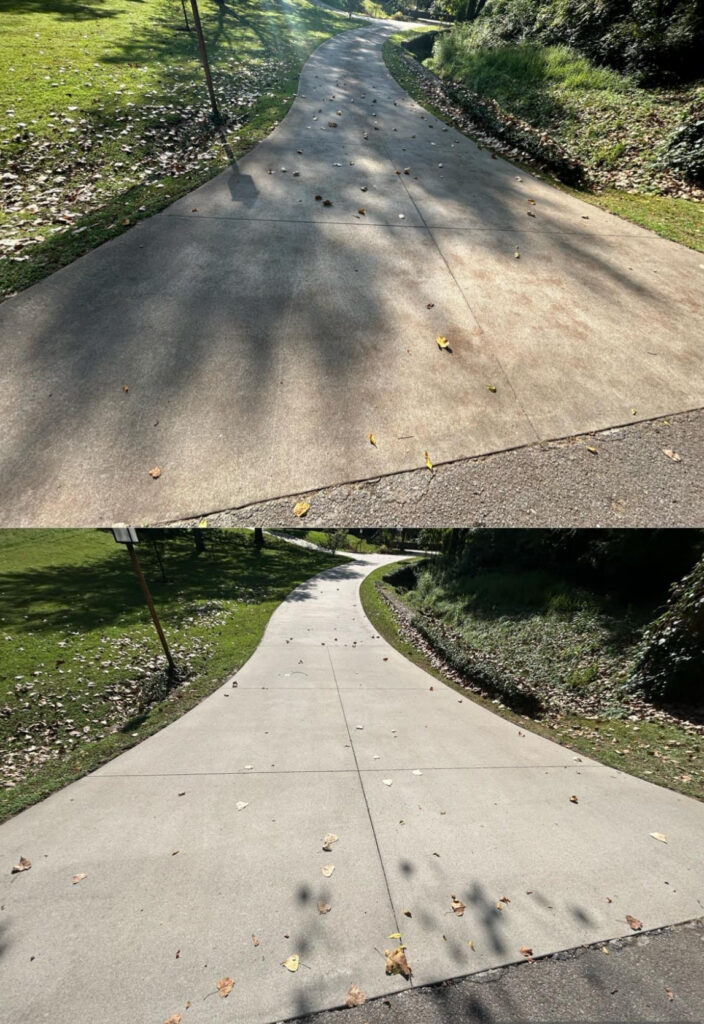
Yes. Wet leaves release tannins, the same natural compounds that color tea and wine, and porous concrete absorbs them like a sponge. The result is brown or rust colored leaf prints that remain after the leaves are removed. The longer leaves sit wet on the surface, the deeper the stain sets.
Rain does not rinse tannin stains away, because the pigment is inside the pores of the concrete rather than sitting on top. That is why the stains survive both the leaf blower and the garden hose, and why they need chemistry, not just water, to release.
Why fall is the hardest season on your concrete
Leaves are only the start of the fall assault. Acorns and black walnuts, both everywhere in the Valley, leave some of the darkest organic stains concrete can take, with walnut hulls staining nearly black as they break down. Sweetgum balls, crabapples, and berries dropped by birds each add their own marks, and every stain gets worse the longer it marinates under a wet leaf pile.
Fall moisture compounds it all. Shorter days and cooler nights mean shaded driveways and north facing walkways stay damp for days at a time, which is exactly what algae and mildew want. Many homeowners notice their concrete developing a green or black film in October and November, right on top of the tannin stains, setting up a driveway that goes into winter looking ten years older than it is.
How professionals remove tannin and organic stains
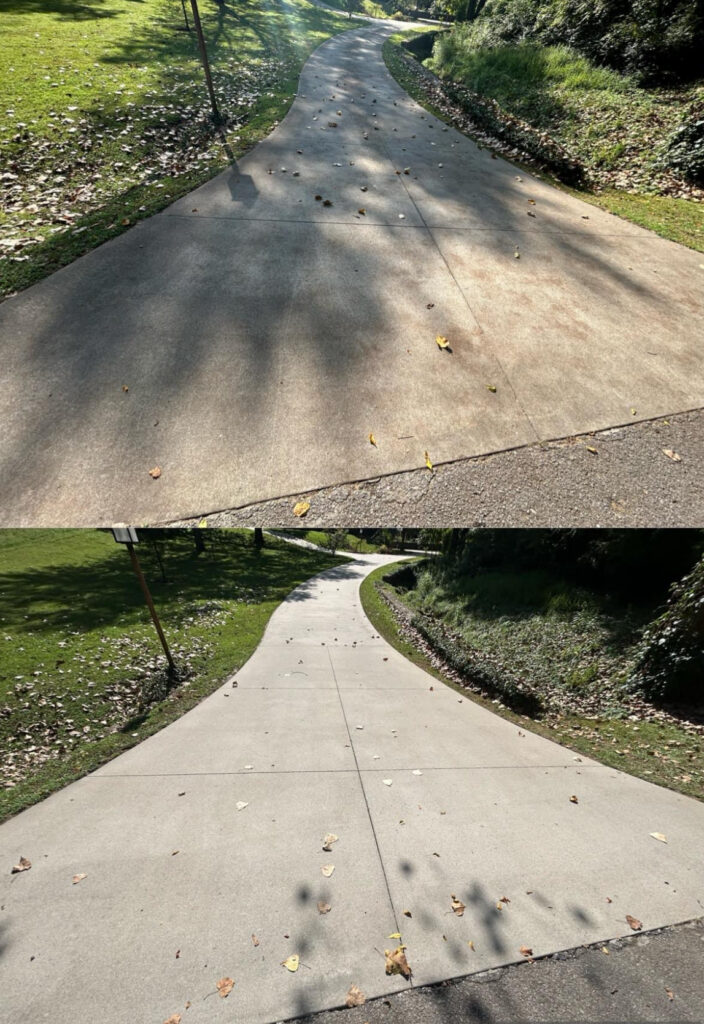
Professional concrete cleaning attacks these stains in two stages. First, a pretreatment breaks down the organic pigments and kills the algae and mildew living in the surface. Then a surface cleaner, the spinning attachment that washes in wide even passes, deep cleans the whole slab uniformly, so the driveway comes back one consistent color instead of a patchwork of clean spots and wand stripes.
Honest expectations matter with the worst offenders. Fresh tannin staining releases readily, and most leaf prints disappear completely. Deep set walnut or rust staining sometimes needs specialty treatments, and the darkest marks may only fade heavily on the first visit before sun and weather finish the job. A professional crew will tell you which category your stains fall into before the work starts, not after.
Slick concrete is a safety problem, not just a cosmetic one
Wet leaves on concrete are slippery on their own, but the film they leave behind is worse. Decomposing leaf matter feeds an algae layer that turns shaded walkways, steps, and porch landings genuinely treacherous every time it rains, and it stays through winter to catch snowmelt. Front steps under a maple are a classic slip spot in every Valley neighborhood.
That risk is easy to retire. A fall cleaning strips the biofilm along with the stains, restoring the natural traction of bare concrete right when the wet season arrives. For households with older family members visiting over the holidays, clean high traction walkways are one of those quiet safety upgrades nobody notices until the year it is missing.
Clean it before salt season, and consider sealing
There is one more reason fall is the right moment for concrete work: what comes next. Winter brings road salt tracked off tires, deicer scattered on walkways, and dozens of freeze and thaw cycles. Concrete already holding moisture in a layer of organic grime takes that abuse worse, and salt scaling, the surface flaking you see on older driveways, loves a dirty slab.
A thorough fall cleaning gives the surface its best shot at wintering well, and it is the required first step if sealing is on your list. Sealer applied over stains locks them in permanently, so the order is always clean first, seal second. Cleaned and sealed in October, a driveway sheds leaf stains, salt, and snowmelt all winter and rinses back to bright with spring rain.
Bottom Line
Fall leaves, acorns, and walnuts stain concrete from the inside, and the marks only deepen the longer they sit, so the window between leaf drop and hard freeze is the time to act. Professional cleaning lifts the stains, strips the slick algae layer, and preps the slab for salt season or sealing. Blue Ridge Pressure Washing restores driveways, walkways, and patios across Winchester and Front Royal, so get a free quote before winter locks the stains in until April.
Related reading: Storefront Pressure Washing Before the Holiday Season, Deck Cleaning Before Fall Staining: Get the Prep Right


