Soft Wash Specialists We treat your home like our own

Fall House Washing: Prep Your Home Exterior for Winter

Spring gets all the attention when people talk about washing a house, but ask anyone who cleans exteriors for a living and they will tell you fall is the sleeper season. The summer that just ended was one long growing season for algae and mildew, and the winter ahead is four months when none of it can be removed and all of it can spread.

A house washed in September or October goes into winter clean and comes out of it clean. A house that skips fall carries an entire summer of growth through the freeze and looks its worst for the holidays. Here is why the fall wash earns its spot on the checklist for Winchester and Front Royal homes.

Should you wash your house in the fall?

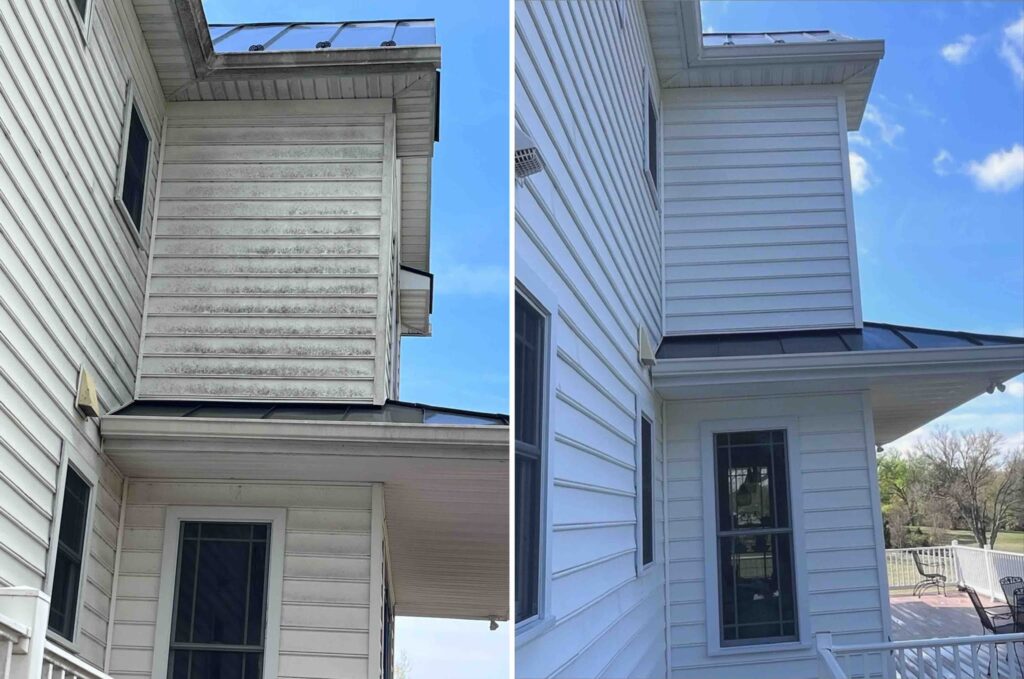
Yes. Fall is the second most effective time of year to soft wash a home, because it removes the algae, mildew, and grime that built up over the humid summer before winter locks it against your siding for months. A fall wash also means the house looks its best through the holidays and needs less work come spring.

Think of it as ending the growing season on your terms. Organic growth slows in cold weather but does not die, so whatever is on the siding in November is still there in March, usually with new company. Removing it in fall resets the clock at the smartest possible moment.
Should you wash your house in the fall?, Blue Ridge Pressure Wash

What summer leaves behind on your siding

By September, a Valley home has absorbed three months of humidity, thunderstorm splash, and airborne spores. The shaded north side is usually showing its green tint again, mildew dots are spreading under eaves and behind shrubs, and every corner of the porch ceiling seems to have its own spider. Wasp nests, dirt dauber tubes, and dust webbed onto the siding round out the summer collection.

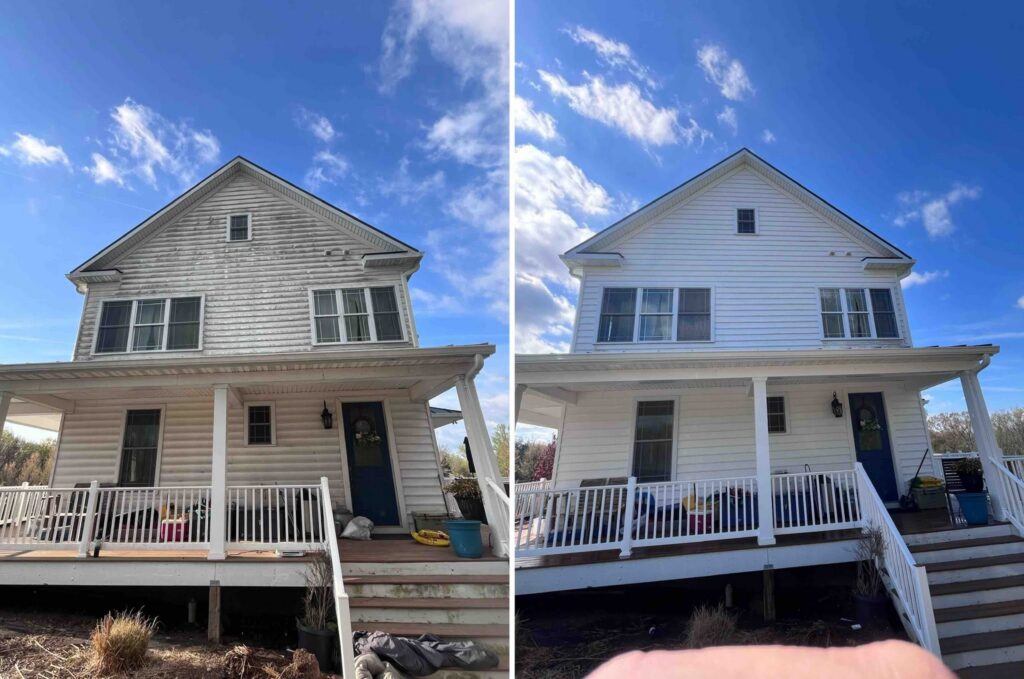
None of that is just cosmetic. Algae and mildew hold a film of moisture against siding and painted trim, and they keep feeding whenever temperatures allow. A soft wash clears all of it in one visit: siding, soffits, gutter exteriors, and porch ceilings, killed at the root with professional detergents rather than smeared around with a brush.

Why winter makes existing grime worse

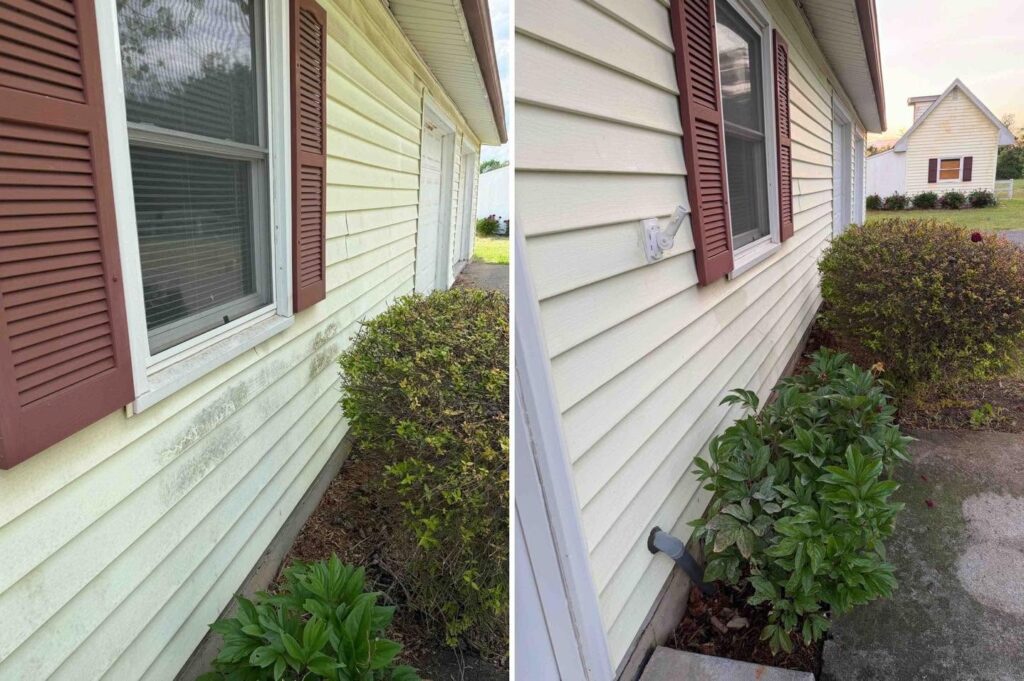
Winter is hard on a dirty house in a way it is not on a clean one. Every place organic growth holds moisture becomes a freeze point, and repeated freezing and thawing works at paint edges, caulk lines, and siding seams all season long. Grime on horizontal surfaces catches and holds snowmelt, and shaded green patches stay damp for weeks at a time between storms.

There is a practical problem too: once overnight temperatures settle below freezing, washing season is largely over until spring. The window between the last leaf drop and the first hard cold snap is when the exterior gets whatever care it is going to get. Homes that catch that window go into the freeze protected. Homes that miss it wait until April, and the buildup compounds the whole time.
Why winter makes existing grime worse, Blue Ridge Pressure Wash

Clean for the season everyone actually sees your house

Here is the argument nobody makes about fall washing: winter is peak visibility season for your exterior. Leaves drop, landscaping dies back, and suddenly the house itself is the whole show from the street. Add holiday lights, family arriving for Thanksgiving, and neighborhood gatherings, and October turns out to be exactly the right time to have the siding bright and the gutters streak free.

Holiday decorations look noticeably better on a clean canvas. Light strings run along gutter faces and rooflines, wreaths hang against siding and doors, and every photo from the front yard has your exterior in the background. A fall soft wash is the difference between decorations on a crisp white backdrop and decorations on a gray one.

What a smart fall exterior visit includes

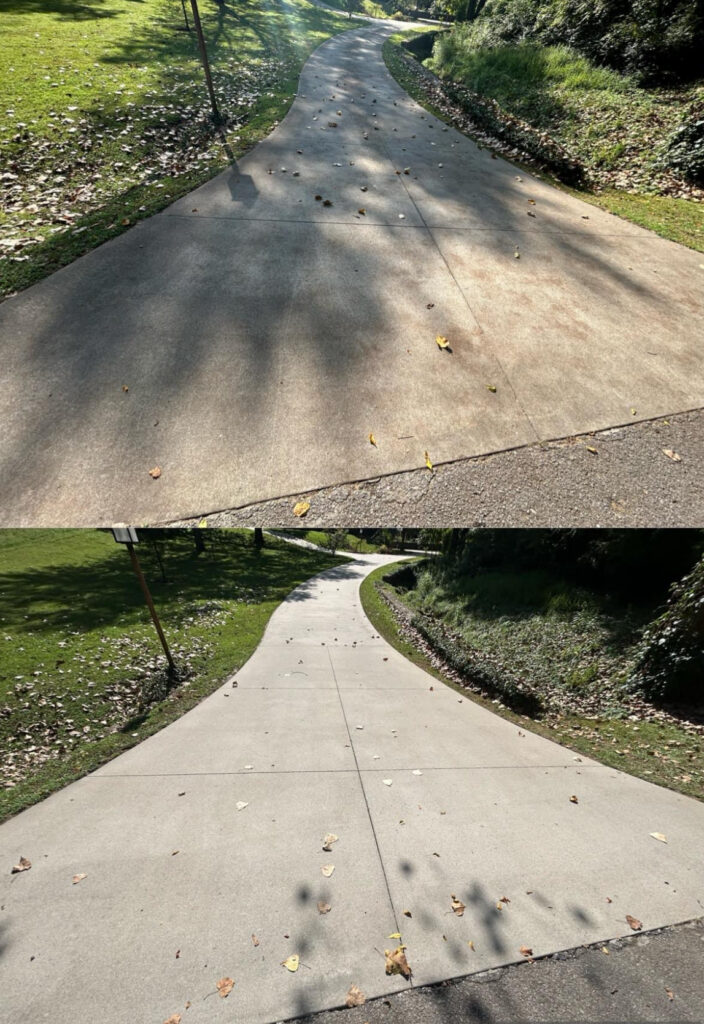
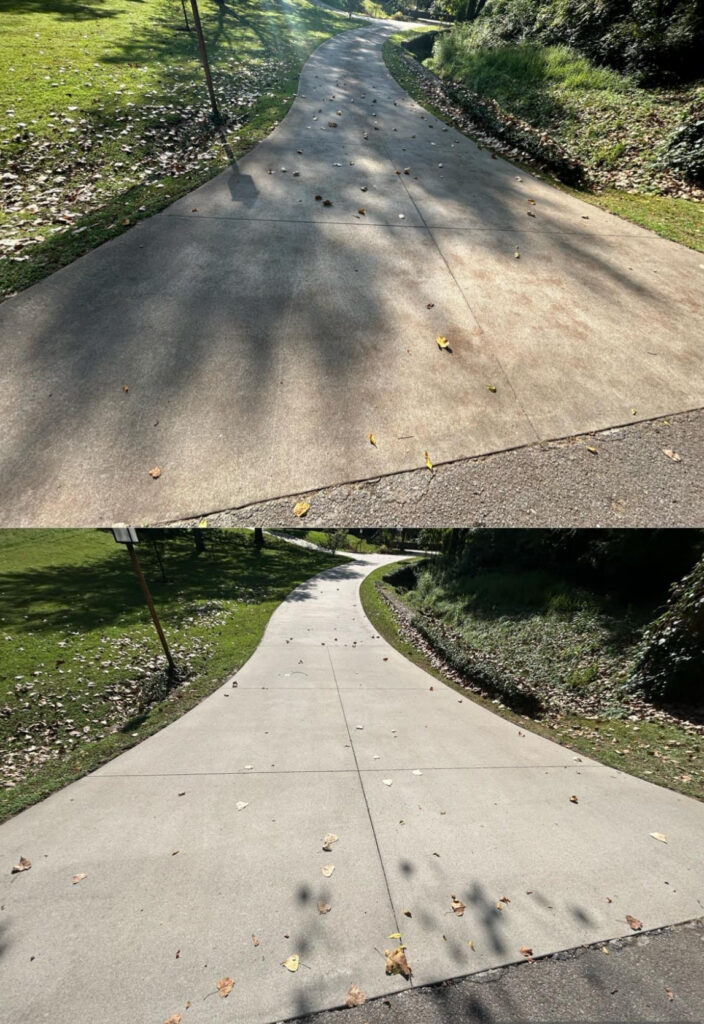
The efficient move is bundling. A fall visit typically pairs the house soft wash with gutter cleaning and brightening, since the crew is already working the roofline as the leaves finish dropping. Many homeowners add the driveway and walkways so concrete goes into salt season clean, and a quick rinse of the porch, patio, and outdoor furniture closes out the outdoor season properly.

Fall is also the moment to look up. If the roof is showing black streaks, cooler weather is a fine time for a soft wash roof cleaning, and it beats letting the algae feed for another year. One scheduled visit in September or October can reasonably reset the entire exterior, usually at better package pricing than booking each service separately in spring.

Bottom Line

A fall house wash clears out a full summer of algae and grime before winter freezes it in place, carries your curb appeal through the holidays, and shortens the list come spring. The scheduling window between leaf drop and hard freeze is short in the Valley. Blue Ridge Pressure Washing soft washes homes across Winchester and Front Royal all fall, so grab a free quote and claim a date before the calendar tightens up.

Related reading: Why Fall Gutter Cleaning Matters in Winchester and Front Royal

Why Fall Gutter Cleaning Matters in Winchester and Front Royal
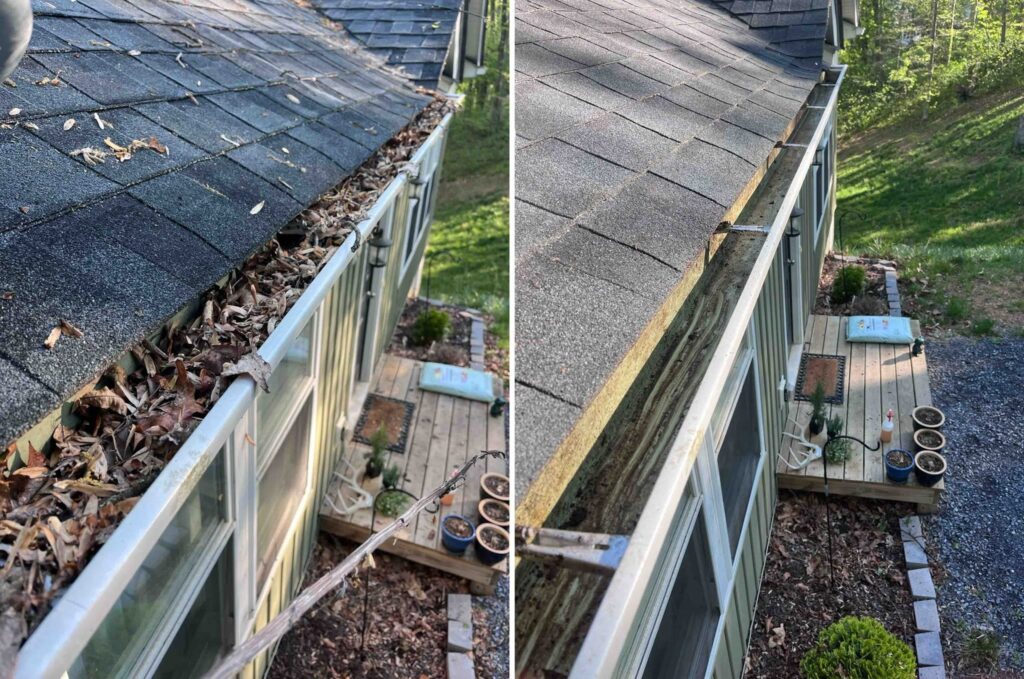
Gutters are the one part of your exterior that fails silently. Nobody notices a clog in October. Everybody notices the ice sheet on the front steps in January, the water stain spreading across the basement wall, or the fascia board that turned soft behind a gutter that overflowed all winter. By then the cheap fix has already become an expensive one.

The Shenandoah Valley is full of mature oaks and maples, which makes fall gutter cleaning less of a chore and more of a deadline. Here is when to schedule it, what clogged gutters actually do to a house over winter, and why the outside of the gutter deserves attention too.

When should you clean your gutters in Winchester, VA?

Gutters in the Winchester and Front Royal area should be cleaned at least twice a year, once in late spring and once in late fall after the bulk of the leaves have dropped, typically from late October into November. Homes surrounded by mature trees often need a third cleaning midway through the leaf drop.

The fall cleaning is the one you cannot skip. It is the last chance to empty the system before snow, ice, and months of freezing weather lock everything in place. A gutter that goes into December full of wet leaves stays full until March, and it causes damage the entire time.

When should you clean your gutters in Winchester, VA?, Blue Ridge Pressure Wash

What clogged gutters do to your home over winter

A gutter’s whole job is moving water away from the house, and a clogged one does the opposite. Water overflows the front edge and lands right at the foundation, where it saturates the soil against your basement wall. It backs up under the shingle edge, soaking the wooden fascia and soffit until they rot. In freezing weather, trapped water becomes ballast, and the added weight bends hangers and pulls gutters away from the house.

Winter adds its signature problem: ice. Water that cannot drain freezes into a solid block, and melting snow refreezes at the clogged edge into ice dams that force water backward under the roofing. Overflow also drips onto walkways and steps below, creating a fresh sheet of ice in exactly the spot your family walks every morning.

The Valley’s leaf drop makes timing tricky

The challenge in Winchester and Front Royal is that leaves do not drop on one convenient weekend. Maples let go early, oaks hang on stubbornly into November, and a windy week can undo a cleaning that happened ten days earlier. That is why the smart schedule aims late in the season, after the heaviest drop, rather than at the first sign of color in the Blue Ridge.

Gutter guards help but do not retire the chore. Seeds, pine needles, shingle grit, and crushed leaf fragments still work through most systems, and the guards themselves collect a mat of debris on top that can shed water right over the gutter. Guarded systems still deserve a fall inspection and rinse, just a less frequent one.

The Valley's leaf drop makes timing tricky, Blue Ridge Pressure Wash

Cleaning the inside, brightening the outside

A full gutter service has two halves. Gutter cleaning clears the inside: leaves, shingle granules, and the sludge layer scooped and flushed out, with downspouts tested so water actually exits at the bottom. That is the functional half, the one that protects the roof edge and foundation over winter.

Gutter brightening handles the cosmetic half. Those dark vertical stripes on the gutter face, the ones that survive rain and ordinary house washing, are oxidation and road film electrostatically bonded to the aluminum. They need a dedicated cleaner and hand detailing to release, which is why they laugh at a garden hose. Brightened gutters read as crisp white trim lines around the whole roof, and the difference from the curb is bigger than most homeowners expect.

Pair gutters with a fall exterior cleaning

Fall gutter work bundles naturally with the rest of the exterior. If the house is getting a soft wash before the holidays, the crew is already working the roofline, so cleaning and brightening the gutters in the same visit saves setup time and usually earns package pricing. The same logic applies to a roof cleaning, since gutters catch the debris that roof work rinses down.

There is also a simple safety argument for hiring it out. Gutter cleaning puts homeowners on ladders at the worst time of year, on cool mornings with dew on every rung. Falls from ladders remain one of the most common homeowner injuries, and a professional crew with proper equipment clears the whole system in a fraction of the time, then hauls the mess away instead of leaving it on the lawn.

Bottom Line

Fall gutter cleaning is the cheapest insurance your roofline, siding, foundation, and walkways can buy before winter, and gutter brightening makes the whole house look sharper while the crew is up there. The window is short once the oaks finally let go. Blue Ridge Pressure Washing cleans and brightens gutters across Winchester and Front Royal, on their own or bundled with a fall house wash, so get a free quote before the November rush fills the calendar.

How to Choose a Pressure Washing Company in Winchester, VA

Exterior cleaning looks simple from the curb: a truck, a hose, some soap. That illusion is exactly why hiring goes wrong so often. The gap between a professional crew and a guy with a rental machine shows up later, in your siding, your landscaping, and your window seals. By the time the damage is visible, the crew that caused it has usually cashed the check and moved on.

Before you book anyone in Winchester or Front Royal, run them through this checklist. It takes about ten minutes, and it prevents nearly every horror story we get called out to fix. None of it requires expertise. It just requires asking.

How do you choose a pressure washing company in Winchester, VA?

Choose a pressure washing company by confirming they carry general liability insurance, asking what method they will use on each surface, and checking recent local reviews with photos. The right answer includes soft washing for siding and roofs, and any company planning to put high pressure on either one should not touch your home.

Price matters, but method and accountability matter more. A cheap wash done wrong ends up costing multiples of a professional one done right. The checklist below runs in the order that saves you the most time.

How do you choose a pressure washing company in Winchester, VA?, Blue Ridge Pressure Wash

Insurance is the first filter

Ask for a certificate of general liability insurance before anything else. Water forced behind siding, a cracked window, a streaked roof, or an injured worker on your property all become your problem the moment the company is uninsured. Legitimate companies send proof within hours and never act put off that you asked for it. For total certainty, ask for the certificate to be sent directly from the insurance agency.

This industry is seasonal, and every spring new operations appear that are gone by fall. Insurance, a verifiable business name, and a track record in the community separate real companies from side hustles. If a crew cannot produce a certificate, the conversation is already over.

Ask about methods, not just price

The single most revealing question you can ask is this: what method will you use on my siding and my roof? The correct answer is soft washing, meaning low pressure paired with a detergent mix. Shingle manufacturers and the Asphalt Roofing Manufacturers Association endorse low pressure chemical cleaning, and putting high pressure on a roof voids most shingle warranties on the spot. The same warning applies to vinyl siding, which high pressure can crack, etch, and flood from behind.

Listen for surface by surface answers: soft wash for siding and roofs, a surface cleaner for concrete, gentler settings for wood. If the answer to every surface is the same machine at the same pressure, that is not a cleaning plan. That is a liability holding a wand.

Ask about methods, not just price, Blue Ridge Pressure Wash

Reviews, photos, and local history

Read recent Google reviews and look specifically for photos, mentions of how the crew treated the property, and how the company responded when something went wrong. A five star average built on detailed reviews from Winchester and Front Royal homeowners means far more than a perfect score sitting on a handful of ratings. Pay attention to how far back the reviews go, since consistency over years is the real signal.

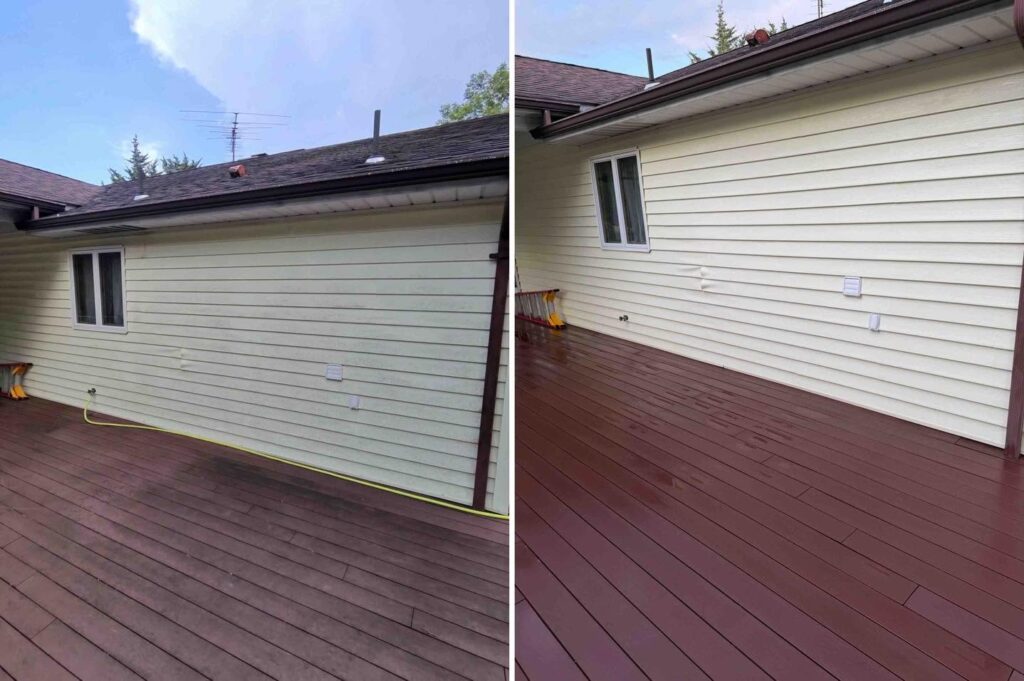
Before and after photos on the company’s website and profiles show you their actual standard of work. Look for evenly cleaned concrete with no stripes, uniformly bright siding, and healthy, intact landscaping in the shots. Companies that are proud of their work document it constantly. Companies that are not, do not. A gallery full of local homes also proves the company actually works in your area.

Get the quote and guarantee in writing

A professional quote lists each surface, the method planned for it, what is and is not included, and the total price. Written scope protects both sides and makes honest comparison possible. Ask whether plants get protected during the wash, whether gutter exteriors are included with the house, and what happens if a stubborn stain does not come out. Vague quotes produce vague results, and disputes always trace back to what was never written down.

Finally, ask about a satisfaction guarantee. Reputable companies stand behind the finished product and come back if a spot was missed. Put it all together: insurance, correct methods, strong local reviews, and a written guarantee. A company that clears all four is worth whatever small premium they charge. That is the profile of a business that will still be here five years from now.

Bottom Line

Insurance, soft wash methods on siding and roofs, real local reviews, and a written surface by surface quote: that is the entire checklist. Any company that clears all four will treat your home well, and any company that stumbles on the first two is no bargain at any price. Blue Ridge Pressure Washing welcomes every one of these questions from Winchester and Front Royal homeowners, and we are glad to answer them before you ever book.

Related reading: How Much Does Pressure Washing Cost

Why Your Roof Has Black Streaks and How Roof Cleaning Fixes It

Look down almost any street in Winchester or Front Royal and you will spot them: dark streaks running down asphalt shingle roofs, usually worst on the side that gets the least sun. Most homeowners assume it is dirt, or worse, that the shingles themselves are failing. It is neither. The pattern is so common in the Valley that many people assume it is just what roofs do.

Those streaks are alive, they are feeding on your roof, and the fix is simpler and far cheaper than the replacement some homeowners get talked into. Here is what is actually happening up there.

What are the black streaks on your roof?

Black streaks on asphalt shingles are colonies of Gloeocapsa magma, an airborne algae that feeds on the crushed limestone filler inside modern shingles. Because the streaks are living growth rather than dirt, rain never rinses them away, and the colonies spread wider every warm, humid season until the roof is properly cleaned.

The algae arrives as spores on the wind, which explains the neighborhood pattern: one roof streaks first, and the surrounding houses follow over the next few summers as the spores travel. Understanding what the streaks are explains why the fix works and why the myths do not.

What are the black streaks on your roof?, Blue Ridge Pressure Wash

Why the Shenandoah Valley feeds roof algae

Gloeocapsa magma thrives on three things: moisture, warmth, and shade. Humid Valley summers, heavy morning dew, and the mature trees shading so many Winchester and Front Royal lots create ideal conditions. Streaks almost always start on northern exposures and shaded slopes, where dew lingers longest into the day and the algae never fully dries out. Slopes in full sun resist it longest, which is why the streaking looks so uneven from house to house around town.

Modern shingles accidentally made the problem worse. Manufacturers add crushed limestone as filler in the asphalt, and that limestone is exactly what the algae eats. Older roofs contained less of it, which is why heavy black streaking feels like a newer phenomenon across the Valley even on quality shingles.

What the streaks are doing to your shingles

The damage starts out cosmetic and turns structural over time. The algae holds a layer of moisture against the shingle surface and slowly consumes the limestone, loosening the protective granules that shield the asphalt from UV. Darkened streaks also absorb more summer heat, which raises attic temperatures and cooling bills below. You can sometimes spot the evidence in the gutters, where loosened granules collect below streaked sections.

Left long enough, the algae invites worse company. Lichen and moss root directly into the shingle surface and pry granules loose far faster than algae alone. A roof that should have served 25 years can give up seasons early, and in the meantime the streaks drag down curb appeal and raise questions during any home sale or refinance appraisal.

What the streaks are doing to your shingles, Blue Ridge Pressure Wash

How professional roof cleaning works

The industry standard, endorsed by the Asphalt Roofing Manufacturers Association, is a soft wash: a low pressure application of a sodium hypochlorite based cleaning solution that kills the algae completely without disturbing a single granule. No scrubbing, no blasting, no foot traffic grinding across fragile shingles. Landscaping below gets rinsed and protected throughout the process. A typical residential roof takes only a few hours from setup to final rinse.

Pressure washing a shingle roof is never the answer. It strips granules, shortens the roof’s life, and voids most manufacturer warranties in the process. After a proper soft wash, the algae dies immediately, most streaking disappears right away, and the roof continues to brighten over the following weeks as rain rinses the residue off. If a crew shows up planning to use a surface cleaner or turbo nozzle on your shingles, send them home.

Keeping the streaks from coming back

A quality roof cleaning typically keeps algae away for several years. To stretch that further, trim back branches that shade the roof, keep gutters clean so debris never sits and holds moisture, and consider zinc or copper strips at the ridge. Rainwater running over the metal releases ions that quietly suppress new growth down the whole slope. New growth almost always starts where a branch shades the same spot every afternoon.

Many homeowners simply put roof washing on a maintenance cycle every three to five years, the same way they schedule house washing. It is a small line item compared to replacing a roof early, and it keeps the biggest surface on your home looking as cared for as the rest of the property. Bundling the roof with a house wash usually earns a better combined price as well.

Bottom Line

Black streaks are algae eating the limestone inside your shingles, and they will keep spreading until they are killed at the root with a proper soft wash. Professional cleaning costs a fraction of early roof replacement and restores your curb appeal in a single visit. If your Winchester or Front Royal roof is streaking, have Blue Ridge Pressure Washing take a look and quote a safe, manufacturer approved roof cleaning.

Related reading: Soft Washing vs Pressure Washing

How Much Does Pressure Washing Cost in Winchester, VA?

Exterior cleaning quotes in Winchester can feel all over the map. One company says $200, another says $500 for what sounds like the same job, and the ads on Facebook promise whole house washes at prices that seem impossible. Usually because they are.

Here is what exterior cleaning actually costs in the Winchester and Front Royal area, broken down by service, along with the factors that move a quote up or down so you can recognize a fair number when you see one. Every range below reflects real jobs in this market, not national averages.

How much does pressure washing cost in Winchester, VA?

Most homeowners in Winchester pay $250 to $600 for a full house soft wash, $150 to $350 for a driveway cleaning, $400 to $900 for roof cleaning, and $200 to $450 for a deck or patio. Prices vary with square footage, stories, buildup, and access, so treat these as planning ranges rather than firm quotes.

Most local companies price by the job after seeing the property or measuring it on satellite imagery. Be cautious with anyone quoting a firm price without asking a single question about your home. That number tends to grow once the truck arrives.

How much does pressure washing cost in Winchester, VA?, Blue Ridge Pressure Wash

House washing costs by home size

A single story ranch typically lands between $250 and $400 for a complete soft wash covering siding, soffits, and gutter exteriors. A two story colonial usually runs $350 to $600, and larger homes, walkout basements that add a third level of wall, and houses with heavy growth push beyond that range. Gutter brightening, window cleaning, and similar extras stack on top of these base ranges.

Siding material and condition matter as much as size. A lightly dusty vinyl home cleans much faster than stucco holding years of shaded mildew. Homes washed on a regular cycle often earn maintenance pricing too, since there is simply less buildup to remove each visit. The first wash is usually the most expensive one you will ever buy.

Concrete, decks, fences, and roofs

A standard two car driveway usually costs $150 to $350, with sidewalks and patios often added on for $75 to $150 more while the equipment is already set up. Oil, rust, and leaf stains take specialty treatments that add to the price. Deck and fence washing generally runs $200 to $450 depending on size and whether it is a basic clean or full prep for stain.

Roof cleaning is its own category, usually $400 to $900 in our area. It costs more than house washing because of the safety equipment, the specialized soft wash chemistry, and the care asphalt shingles demand. It also delivers the biggest payoff of any service, since a proper cleaning can add years of life to a roof somebody assumed needed replacement. If a roof cleaning estimate ever rivals a replacement quote, get another opinion, because it should not.

Concrete, decks, fences, and roofs, Blue Ridge Pressure Wash

What moves a quote up or down

Square footage and stories drive the base price, since taller walls mean more time, more solution, and more equipment. Heavy algae, years of accumulated buildup, and first time cleanings cost more than routine maintenance washes. Tight access, steep rooflines, delicate landscaping, and limited water supply all add time and care to the job as well. None of these factors move a quote unfairly. They simply reflect the hours and materials the job takes.

Bundling saves real money. Combining a house wash with the driveway, roof, or deck in a single visit cuts setup time, and most companies discount accordingly. When you compare quotes, make sure each covers the same surfaces with the same methods. A $200 quote that skips soft wash chemistry is not the same service as a $400 quote that includes it. Apples to apples comparison is the whole game when quotes differ.

Why the cheapest quote can cost the most

Exterior cleaning has a low barrier to entry, and every spring brings new operators with a rental machine, no insurance, and a Facebook page. A bargain wash that etches your siding, kills your boxwoods, or strips granules off your shingles becomes the most expensive service you ever bought. The damage rarely shows up the same day either, which makes recovery from a vanished operator nearly impossible.

Before you book, look for proof of insurance, reviews from Winchester and Front Royal homeowners, and a written quote listing surfaces and methods. Fair local pricing lives inside the ranges above. Anything dramatically below them is usually missing insurance, chemistry, or experience, and sometimes all three at once. Two minutes of verification beats two years of regret.

Bottom Line

Plan on $250 to $600 for a house wash, $150 to $350 for concrete, $400 to $900 for a roof, and $200 to $450 for decks in the Winchester area, with your exact price depending on your specific home. A real quote takes only a few minutes and removes all the guesswork. Blue Ridge Pressure Washing provides free, itemized quotes across Winchester and Front Royal, so you know the exact number before anyone unrolls a hose.

Related reading: Soft Washing vs Pressure Washing

Soft Washing vs Pressure Washing: What Your Home Actually Needs

Plenty of Winchester homeowners have watched a neighbor blast green algae off vinyl siding with a rental pressure washer, and plenty of siding, window seals, and paint jobs have paid the price for it. High pressure is a tool, not a cleaning method. The machine is never the problem. Where and how it gets pointed is.

Professional exterior cleaning is really two different services: soft washing and pressure washing. Knowing which one each surface of your home needs is the difference between a house that looks new and a repair bill you never saw coming. Here is how to tell them apart, surface by surface.

What is the difference between soft washing and pressure washing?

Soft washing cleans with low pressure, similar to a strong garden hose, plus specialized detergents that kill algae, mildew, and bacteria on contact. Pressure washing uses high pressure water to physically blast buildup off hard surfaces. Soft washing belongs on siding, roofs, and painted surfaces, while pressure washing belongs on concrete, stone, and other hardscapes.

The two methods are not competitors. A complete exterior cleaning in Winchester usually uses both, matched carefully to each surface on the property. Understanding the split makes every quote you collect easier to judge.

What is the difference between soft washing and pressure washing?, Blue Ridge Pressure Wash

Surfaces that need soft washing

Vinyl siding, asphalt shingle roofs, stucco, painted wood, cedar, screens, and gutters all call for soft washing. These materials were never built to take concentrated high pressure. A wand can crack panels, force water behind siding into your wall cavity, strip paint, and tear the protective granules right off shingles. Roof manufacturers void warranties over exactly that kind of damage. Once water gets driven behind vinyl, it can sit against the sheathing for months, and you will not know until a stain shows up inside.

Soft washing also wins on how long the results last. Because the detergent kills growth at the root instead of shaving off the visible layer, a soft washed house stays clean noticeably longer, often two to three times longer than a pressure rinse alone. The house is not just clean. It is sanitized. That is why a proper soft wash still looks good when the next spring rolls around.

Surfaces built for pressure washing

Concrete driveways, sidewalks, patios, pavers, and most brick and stone hardscapes are where real pressure earns its keep. Dirt embedded in the pores of concrete, tire marks, and mildew colonies in the surface texture need mechanical force to release, and these dense materials can take it without damage. Years of ground in grime lift out of Winchester driveways this way, and the color change is usually dramatic.

The professional tool of choice is a surface cleaner, a spinning bar under a hood that cleans in wide, even passes. It is how pros avoid the zebra striping that wand work leaves across a driveway. Stubborn problems like rust, oil, or leaf stains get targeted pretreatments before the main wash so the whole slab finishes uniform. Hot water units add another gear for gum, grease, and heavy buildup.

Surfaces built for pressure washing, Blue Ridge Pressure Wash

Why the cleaning solution matters more than the machine

What is in the tank matters more than the number on the pressure dial. Professional soft wash solutions are mixed for the specific surface and the level of growth: strong enough to sanitize, gentle enough to protect paint, caulk, and finishes. Landscaping gets rinsed and protected before, during, and after the wash so your plants come through untouched. Every mix also gets adjusted for the temperature and surface condition on the day of the wash.

This is also where DIY attempts go sideways. Household bleach straight from the jug, wrong ratios, or skipped plant protection can kill shrubs, streak siding, and corrode fixtures. The chemistry is the service. The machine is just the delivery system.

What happens when the method is wrong

We regularly see the aftermath of the wrong method: vinyl etched with permanent wand marks, water stains blooming inside window frames, shingle edges shredded bare, and deck boards left fuzzy with raised grain. Most of that damage cannot be undone. It can only be replaced. Roof damage is the most expensive version, since granule loss quietly subtracts years from the shingles.

If a company quotes one price and one method for your entire property, keep shopping. The right crew will walk each surface, explain whether it gets soft washed or pressure washed and why, and put both in writing. That five minute conversation is the cheapest insurance your exterior will ever get. Method questions cost nothing to ask and tell you everything you need to know.

Bottom Line

Soft washing sanitizes delicate surfaces like siding and roofs, and pressure washing scours hard surfaces like concrete and stone. Nearly every Winchester home needs both, applied in the right places and never swapped. Blue Ridge Pressure Washing matches the method to every surface on your property and spells it out in the quote, so get a free estimate before anyone points high pressure at your house.