
Deck Cleaning Before Fall Staining: Get the Prep Right
Ask anyone who has watched a fresh coat of deck stain peel by spring, and the story is almost always the same: the stain went on over wood that was never properly cleaned. The product gets blamed, the brand gets switched, and the same thing happens again two years later. The stain was never the problem. The prep was.
Fall is one of the best staining windows of the year in the Winchester and Front Royal area, which makes early fall the moment to get the wash right. Here is why cleaning comes first, what professional deck prep involves, and how to time the two steps so the finish actually lasts.
Do you need to wash a deck before staining it?
Yes. Stain only performs on clean, open wood grain, so every deck needs a proper wash before staining. Mildew, gray weathered fibers, dirt, and failing old finish all block the stain from penetrating, which leads to blotchy color and early peeling. Wash first, let the wood dry for two to three days, then stain.
Manufacturers say the same thing on every can, because they know where the warranty claims come from. Stain is not paint sitting on the surface. It has to soak into the wood, and it cannot soak into a layer of grime, spores, and dead gray fibers.
Why fall is prime staining season in the Valley
Deck finishes are picky about weather. Most stains want surface temperatures roughly between 50 and 85 degrees, moderate humidity, and a dry stretch of a few days on either side of application. Valley summers violate all three regularly, with 90 degree deck boards that flash the stain dry too fast and pop up thunderstorms that ruin a wet coat. September and October, by contrast, serve up exactly the conditions the label asks for.
Fall staining also means the protection is in place before the hardest season on wood. Winter snow sitting on horizontal boards, freeze and thaw cycles working at every crack, and months of moisture do real damage to unsealed decks. A deck cleaned and stained in early fall goes into winter defended and comes out in spring needing nothing.
What a professional deck wash actually involves
Wood is soft, and this is where do it yourself attempts cause permanent damage. High pressure blasts the soft springwood out from between the harder grain lines, leaving boards fuzzy with raised splinters, wand stripes, and gouge marks that only sanding can undo. Professional deck cleaning uses low pressure paired with wood safe detergents that kill mildew and lift grime chemically instead of mechanically.
The second professional step most homeowners skip is brightening. After the cleaning solution does its work, a wood brightener rinse restores the wood’s natural pH, opens the grain back up, and warms gray boards back toward their original tone. Railings, spindles, and stairs get the same treatment, and surrounding plants get rinsed and protected throughout. The deck that emerges is clean, bright, and chemically ready to accept stain evenly.
The gray wood problem, explained
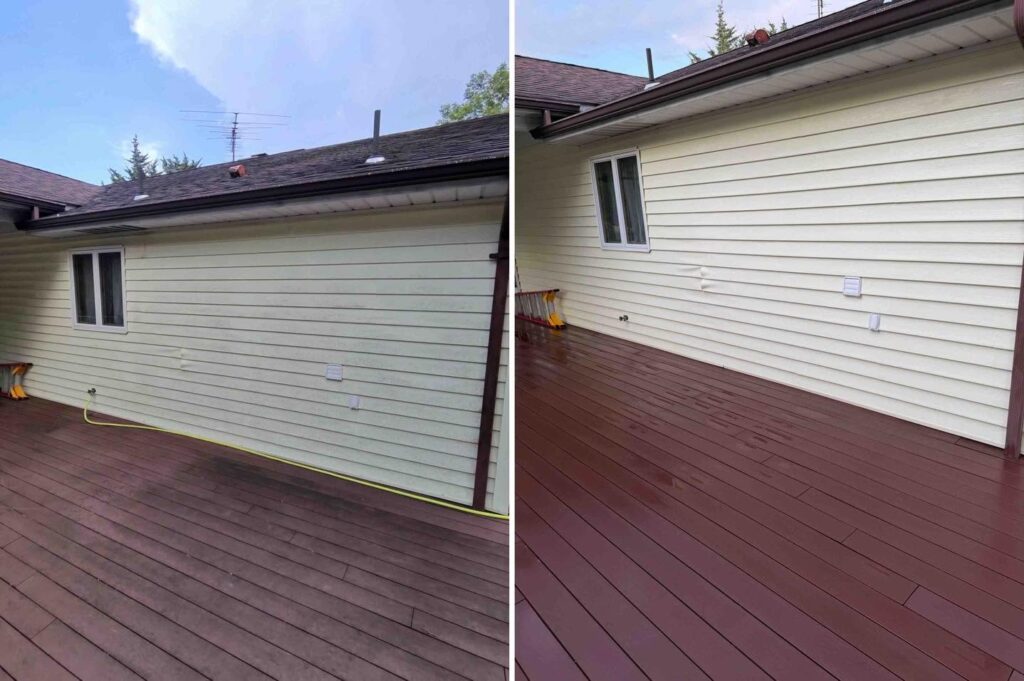
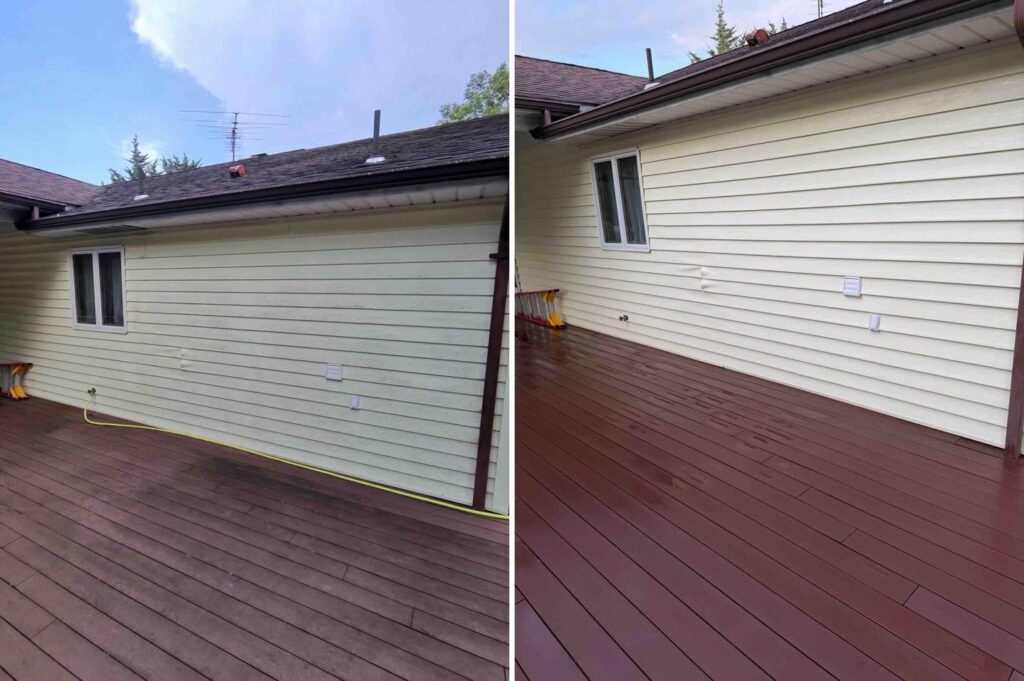
That silver gray color on a weathered deck is not dirt. It is a layer of wood fibers killed by UV exposure, sitting on top of sound wood like a coat of dust that happens to be attached. Stain applied over gray wood is bonding to dead fibers, and when those fibers let go, the finish goes with them. That is the peeling most homeowners have watched happen.
Proper cleaning and brightening removes most of that dead layer and restores a surface stain can actually grip. It is also the honest test of a deck’s condition: once the gray lifts, you can see whether boards are sound or genuinely worn out, and which spots need a sanding pass or a replacement board before finish goes on. Plenty of decks that look ready for replacement turn out to be one wash away from looking ten years younger.
Timing the wash, the dry, and the stain
The sequence matters more than the products. Wash first, then give the wood two to three dry days so moisture trapped in the boards can escape before stain seals the surface. Stain applied to damp wood clouds, adheres poorly, and peels early, which is why professionals check the forecast for a clear window covering both the drying days and the day of application.
In practice that means booking the wash by late September or early October in the Winchester area, while warm dry stretches are still reliable. Wait too long and overnight temperatures start falling out of range, and the project slides to spring, leaving bare wood exposed all winter. Even homeowners who plan to apply the stain themselves come out ahead having the cleaning and brightening done professionally, since prep is the step that decides the outcome.
Bottom Line
A deck stain job succeeds or fails before the first drop of stain goes on, and fall is the Valley’s best window to do the whole sequence right: professional wash, brightener, dry days, then finish. Blue Ridge Pressure Washing cleans and preps decks across Winchester and Front Royal, whether we hand it back ready for your stain brush or you just want the wood restored, so get a free quote while the fall staining window is still open.
Related reading: Fall House Washing: Prep Your Home Exterior for Winter, Storefront Pressure Washing Before the Holiday Season


