
Fence Cleaning: Wood and Vinyl Fences Need Different Care
A fence is usually the largest structure in a yard after the house itself, hundreds of linear feet of surface standing in full view of the neighborhood. Yet it is the last thing anyone cleans. White vinyl slowly goes green and dingy, wood quietly fades to gray, and because the change happens over years, homeowners stop seeing it entirely. Visitors see it immediately.
The fix is faster and cheaper than most people expect, but it is not one size fits all. Vinyl and wood fences fail differently, clean differently, and get damaged by exactly the treatment the other one needs. Here is how professional fence washing handles each in the Winchester and Front Royal area.
How do you clean a wood or vinyl fence?
Vinyl fences are soft washed: a low pressure application of algae killing detergents followed by a gentle rinse, which restores the white without scarring the surface. Wood fences need low pressure paired with wood safe cleaners, and often a brightener to reverse graying. High pressure damages both, etching vinyl and shredding soft wood grain.
The common thread is that chemistry does the cleaning and water only rinses. Anyone attacking a fence with a high pressure wand alone is trading a temporary result for permanent surface damage, on a structure meant to last decades.
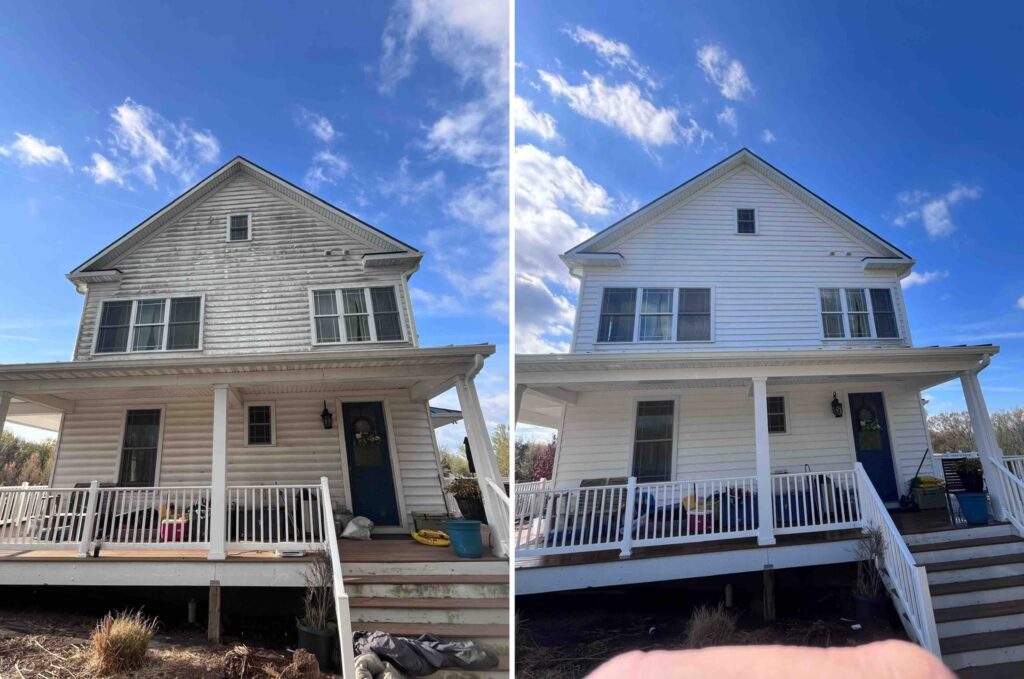
Why fences get dirty faster than your house
Fences live a harder life than siding. They sit in ground contact zones where rain splashes soil and organic matter onto the lower boards, sprinklers hit them several times a week, and shrub lines and shade trees keep whole sections damp. Unlike your house, a fence has no roof overhang protecting it, takes weather from both sides, and often runs through full shade where algae never dries out.
That is why a fence line shows green film years before the house does, always worst on the north side and under trees. In the Valley’s humid summers the growth accelerates, and by fall many fences carry a full season of algae, mildew, spider webbing, and grime, right when holiday guests and leaf bare sightlines put the whole backyard on display.
Vinyl fences: the green film problem
Vinyl’s great promise is that it never needs paint, but nobody mentions that it still needs washing. The green tint on white vinyl is the same algae that colonizes siding, and it bonds to the slightly textured surface where a garden hose cannot reach it. Left long enough it graduates to black mildew spotting, and the fence starts reading as old rather than merely dirty.
Soft washing resets vinyl completely. The detergent kills the growth at the root, the low pressure rinse carries it away, and the fence comes back startlingly white, usually in a single visit. Because the treatment sanitizes rather than just rinses, the results hold season after season. What ruins vinyl is the opposite approach: high pressure up close, which permanently etches the glossy surface and gives future algae a better grip.
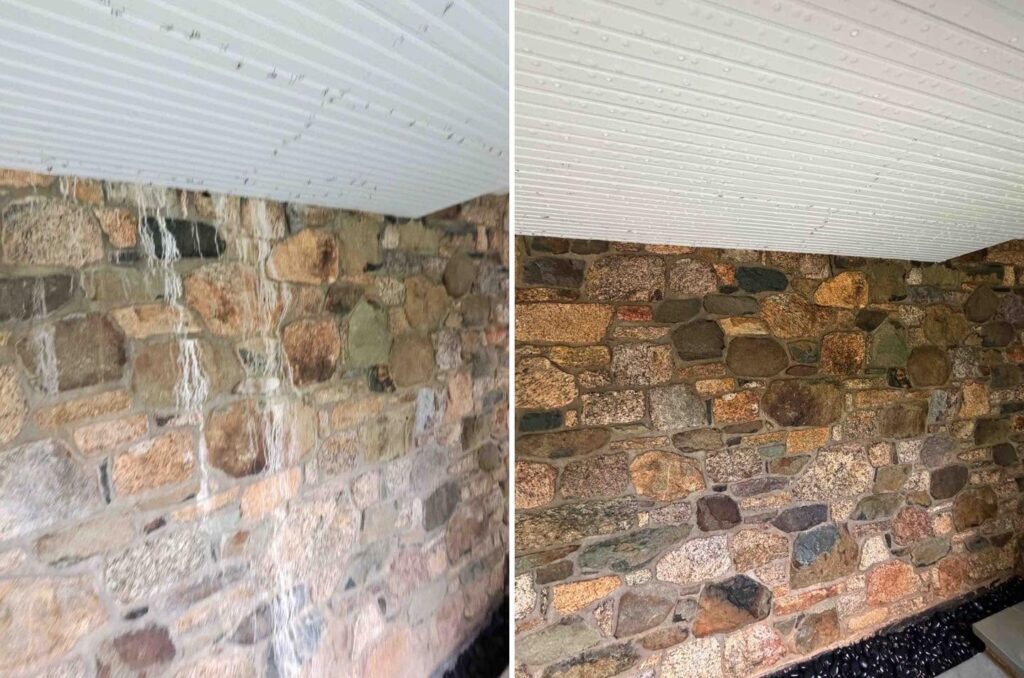
Wood fences: graying, mildew, and stain prep
Wood fences fade to gray the same way decks do, through UV exposure killing the surface fibers, with mildew and algae adding blotches in the shaded runs. Professional cleaning pairs gentle pressure with wood safe detergents, and a brightener treatment afterward reverses much of the graying, warming the boards back toward their original cedar or pine tone. The transformation on a 20 year old fence routinely shocks its owner.
Cleaning is also step one of protection. If the plan is to stain or seal the fence, that finish needs clean, open grain to penetrate, and fall offers the same ideal application weather decks enjoy. A fence washed and sealed in September or October sheds winter moisture instead of absorbing it, which is the difference between boards that last decades and boards that cup, crack, and rot from the bottom up.
When to schedule fence washing, and what it pairs with
Fall earns the recommendation for the same reasons it does everywhere else on the property: the growing season is ending, stain weather is ideal, and the fence goes into winter clean instead of wearing a coat of algae through four wet months. Booking is also easier than in the spring rush, and cooler weather is gentler on cleaning solutions than July heat.
Fence washing rarely travels alone. Most homeowners bundle it with a deck cleaning, a house soft wash, or a concrete visit, since the crew and equipment are already on site and package pricing reflects that. For pre listing homes, a clean fence line is one of the cheapest ways to make an entire backyard photograph better, framing the lawn the way fresh paint frames a room.
Bottom Line
Vinyl fences want a soft wash that kills the green at the root, wood fences want gentle cleaning and brightening that reverses the gray, and neither one wants high pressure. Either way, a professional fence washing restores the biggest structure in your yard in an afternoon. Blue Ridge Pressure Washing cleans wood and vinyl fences across Winchester and Front Royal, on their own or bundled with a deck or house wash, so get a free quote and see what color your fence used to be.
Related reading: How Late in the Year Can You Pressure Wash in Virginia?, Pressure Washing Before Selling Your House


